
Lemon Vibrators for Couples: How to Introduce Suction Toys Without Triggering Insecurity
Let's be real. Most partners worry that a vibrator means they're not enough.
I've heard this concern in a thousand different phrasings over twenty years of practice. "If she needs a toy, am I doing something wrong?" Or the reverse: "If I bring this up, will he think I'm not satisfied with him?" The fear isn't really about the device. It's about what the device is supposed to mean.
Here's the thing that changes everything: a lemon clitoral vibrator isn't a referendum on your partner's skills. It's an expansion of what's possible together. And the difference between those two framings determines whether introducing a toy strengthens your connection or creates a wound that takes months to heal.
The real reason partners resist (and it's not what you think)
I've worked with couples where one partner brings home a lemon suction toy with zero preamble. Chaos. I've also worked with couples who have a 20-minute conversation beforehand and it becomes a shared project. Same toy. Completely different outcome.
The resistance isn't usually about the vibrator itself. It's about the story the toy tells. If you introduce it as "I need this because what you're doing isn't working," that's a threat to identity. But if you frame it as "I want us to explore this together because I'm curious what this does to my body, and I want you there," that's an invitation.
The difference is specificity and collaboration. One says you failed. The other says we're building something new.
How to start the conversation before the toy appears
Don't ambush a partner with a lemon vibrator on the nightstand. That approach backfires with remarkable consistency. The conversation should happen first, in a neutral moment, not during sex or when you're both undressed.
Three elements make this work:
1. Lead with curiosity, not need. "I've been reading about lemon clitoral vibrators and how differently they work compared to traditional wand vibrators. I'm curious what that would feel like. Would you be open to trying it with me?" That's collaborative. "I need you to get me a vibrator" is demanding.
2. Make it about sensation, not performance. "I want to understand my own body better, and having you there makes it hotter." Not "You're not getting me there." One is investigative. The other is accusatory.
3. Give them time to process. If your partner says "I don't know" or "I need to think about it," don't push. Let it sit. Partners who feel rushed into accepting a toy often resent it later, even if they initially agree.
What insecurity actually looks like (so you can spot it)
A partner might say yes to a lemon suction toy but still harbor quiet doubts. Watch for these signals that the resistance is still there, even if they're not saying it out loud.
They suddenly get critical about your body or your pleasure. Backhanded comments. Small digs. These are often unconscious attempts to reassert control or prove that the toy isn't "better" than them.
They get quiet during sex, when you expected them to be engaged. They're present but withdrawn, which usually means they're in their head about what the toy represents to them.
They minimize the experience afterward. "That was fine" or "Seemed like you liked it" instead of genuine curiosity about what you felt. Dismissal is often a defense mechanism.
If you see these patterns, stop. Circle back to the conversation. Say: "I noticed you seemed distant. I want to check in. This doesn't change how I feel about you." Then actually listen.
The scaffolding that makes introduction feel safe
Here's a practical sequence that works:
Week 1. Have the conversation. Be clear about why you want to try this. Ask what their concerns are. Don't dismiss them. Write them down, literally. "You're worried this means I'm not attracted to you." Say it back. Validate it. Then address it: "That's not true, and here's why I'm bringing it here."
Week 2. If they're open, show them the toy. Not hidden. Not surprising. Show them a lemon vibrator on your phone, explain how suction technology works differently from vibration, talk about it the way you'd talk about any interesting thing. Demystify it.
Week 3. Let them hold it, examine it. No pressure. They should feel agency here. "Want to turn it on and see what the sensation is like on your hand?" Normalizing is half the battle.
Week 4. Use it together, but start with clothes on or in a non-sexual context. Sounds weird, but the stakes feel lower. You're not in bed. You're just exploring. This removes performance pressure.
Week 5+. Integrate it into your sexual routine, but ask for feedback. "What was that like for you?" Listen to both the literal answer and the energy behind it. Partners who are still processing doubt will be polite but guarded. That's okay. It takes time.
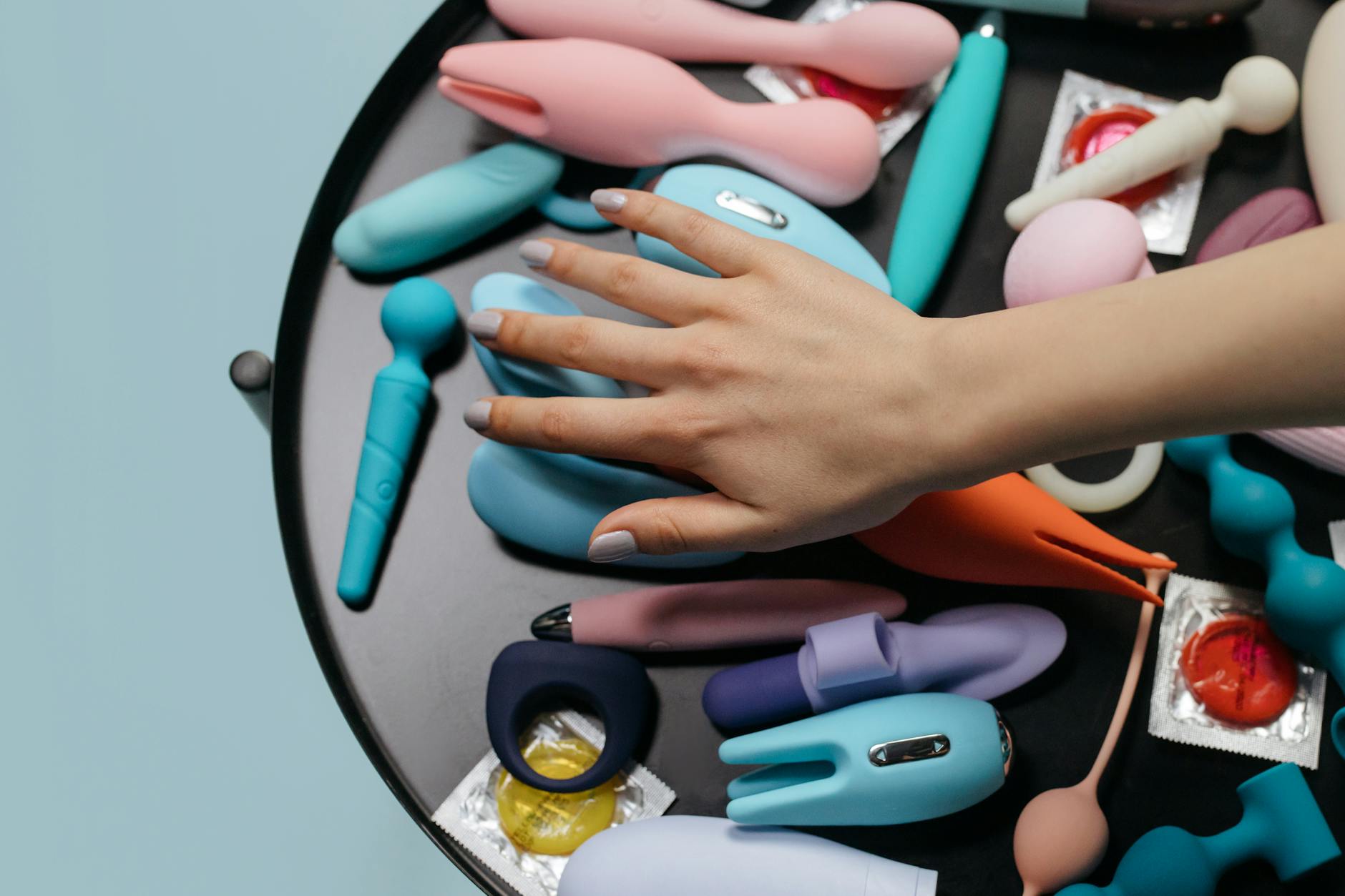
Photo by cottonbro studio on Pexels
When to loop in professional support
Some couples have deeper issues that a toy brings to the surface. Maybe the real problem is that you haven't felt connected in months, and the vibrator is just the visible symptom. Maybe trust is already damaged and adding a third "thing" to the bed triggers all of it.
That's not a reason to avoid toys. It's a reason to work with a therapist first, or alongside the toy introduction. If your relationship is already strained, you need support bigger than a lemon clitoral vibrator can provide. No shame in getting help.
A good couples therapist can help you both understand what the resistance is really about. Sometimes it's about the toy. Often it's about something much older.
What changes when you introduce suction toys the right way
Honestly? Many couples report that the process of having a vulnerable conversation about pleasure, and then exploring together, reignites something that had gone dormant.
It's not the toy doing the work. It's the communication. You had to be honest. You had to ask for what you wanted. Your partner had to choose to be curious instead of defensive. That's intimacy. That's connection.
Partners who work through the initial discomfort and actually use a lemon vibrator together often report higher sexual satisfaction overall. Not because the toy is magic. But because they've learned that talking about sex, asking for things, and trying new things is possible. And safe. And that changes the entire relationship.
The FAQ block: questions couples actually ask
Will my partner think I'm not attracted to them anymore if I want to use a toy?
Not if you've had the right conversation first. Attraction and sensation are different things. I can be wildly attracted to my partner and still want to explore what a lemon clitoral vibrator does to my body. These aren't contradictory. But your partner needs to hear that from you explicitly, multiple times, before the toy shows up. Make it clear: "This isn't about you. This is about discovering something new with you."
What if my partner refuses?
That's their right. You can't push someone into sexual exploration they're not ready for. But you can ask why. Is it fear? Discomfort? Religious or moral beliefs? A previous bad experience? Different reasons need different responses. Fear is often solvable with conversation. Fundamental values differences are harder. If your sex life matters to you and your partner refuses any exploration, that's worth addressing in therapy, because the issue is usually bigger than the toy.
Can we use a lemon vibrator if we've never talked about sex before?
Technically yes, but that's the hard way. Introducing a toy into a relationship where you don't usually talk about pleasure is like throwing a wrench into a machine that's already running on fumes. Start with conversation first. Simple: "I'd like us to talk more openly about what feels good to both of us." Then the toy becomes part of a larger shift, not a shock.
How do I bring this up without it feeling like criticism of my partner?
Timing and framing. Don't do this during sex, right after sex, or when you're frustrated about your sex life. Do it on a neutral day, in a calm moment, when you have time to talk. Start with what you want, not what's missing. "I want to explore this" beats "You're not giving me enough."
What if my partner wants to use it but I feel weird watching?
That's fair. Some people find it easier to participate if there's less direct observation. You can be present without being the main audience. You're next to her, not staring. You're touching her, not monitoring her. Let it be a shared experience, not a performance review. And afterward, ask what she felt. Genuine curiosity transforms awkwardness into connection.
Is it normal for partners to worry that a toy means the relationship is dying?
Completely. But usually that worry says more about their own fears than about the relationship's health. Partners who grew up thinking sex should be "natural" or "spontaneous" often see toys as a sign of failure. Partners who learned that pleasure is something you earn or shouldn't seek often feel threatened by tools that make pleasure more accessible. These are beliefs worth examining, usually with help.
The thing nobody tells you
Couples who can talk about using a lemon vibrator together are usually couples who can talk about other hard things too. Money. Kids. In-laws. The conversation skills you build introducing a toy generalize to everything else.
So introduce it with care. Frame it right. Listen to your partner's fears. Address them. Then explore together. The toy is just the vehicle. The real shift is learning to ask for what you want and actually hear yes.
That's what strengthens a relationship. Not the device. The willingness to be vulnerable about pleasure, and the partner who shows up anyway.
Ready to have the conversation? Start here: "I want to talk about something with you that I'm excited about." Then tell your partner the truth about what you're curious about. The rest will follow.