How to Use Lemon Vibrators With Your Partner When Communication Feels Awkward
The conversation doesn't have to be smooth. Here's how to introduce a clitoral vibrator like the Lem into partnered pleasure when the words feel stuck.
Most couples don't have a smooth conversation about introducing toys into their sex life. The conversation is usually awkward, slightly fumbling, and happens at least three times before anything actually gets used. That's completely normal.
Here's what makes it harder than it needs to be: most of us learned that asking for what we want in bed is somehow unfaithful or ungracious. We treat it like a criticism instead of what it actually is—information about our own body. So when someone wants to introduce a lemon clitoral vibrator like the Lem into partnered pleasure, the words get tangled before they even leave your mouth.
First, let's name what's really going on. This conversation triggers three separate fears at once:
1. Rejection. You're essentially saying "I want this thing to touch me during sex." Your brain reads that as "my partner isn't enough," even though that's not what you mean at all. They'll often hear it the same way initially, which is why the conversation derails.
2. Shame. Many of us grew up with messaging that your own pleasure should happen quietly, privately, or not at all. Naming that you want a specific kind of stimulation can feel like admitting something was wrong with you the whole time.
3. Loss of control. Introducing a tool changes the dynamic. You're no longer just responding to your partner. You're actively directing your own stimulation, which feels powerful and terrifying in equal measure.
Add those three things together and you get silence. Or you get drunk conversations that neither of you remembers. Or you get the toy sitting in a drawer for two years.
Don't make this a State of the Union address. Make it casual context, not a formal negotiation.
The simplest opener I've seen work: "Hey, I've been reading about this, and I think I'd actually enjoy using something like [the Lem] during sex. Would you be open to trying that?" That's it. No preamble. No apology. No explanation of what you think is wrong with your current sex life.
The key is that you're offering information about your own body, not criticism of theirs. "I'd enjoy this" is different than "I need this because what we're doing isn't working." One is additive. One is subtractive. Say the first one.
If your partner hesitates, don't immediately defend the choice. Instead, ask a question back: "What are you worried about?" Most resistance isn't about the toy itself. It's about what they think the toy means. They might be worried it makes them less important. They might be anxious about how to use it. They might not understand why air-suction clitoral vibrators work differently than other toys.
All of those are answerable questions. The toy isn't the problem. The story they're telling themselves about the toy is the problem.
Right after sex when emotion is high (interpretations get messy)
When you're fighting about something else (it becomes collateral damage)
When either of you is tired or stressed (no cognitive bandwidth)
Via text (removes tone, adds anxiety)
Good timing: a regular conversation, during a meal or a walk, when you're both calm and have space. The tone should be the same as talking about wanting to try a new restaurant. Light. Low stakes. This is just something you're interested in.
Frame it as something you want to add to your shared experience, not something missing. "I've been curious about this" lands better than "I don't think I'm satisfied." One is exploration. One is confession.
The first time you use the Lem or another lemon clitoral vibrator together, don't treat it like a test. Treat it like foreplay. Use it during manual play. Use it while you're kissing. Use it while you're inside your partner, if that applies. The vibrator isn't replacing them. It's adding to what's already happening.
Start with lower settings. Pattern 1 or 2. Let your partner see that you're actually enjoying it, which is weirdly reassuring for them. If you're visibly having a good experience, they stop worrying that they're failing you.
If something doesn't work the first time, say so without making it heavy. "That angle isn't doing it for me" is followed by adjustment, not analysis. You're not rewriting your entire sex life based on trial one.
Many partners find that once they see how much pleasure you're getting, they actually want to be the one holding the toy. That's the moment when the dynamic shifts from "oh, a toy" to "oh, this is another way we connect." That doesn't always happen, but when it does, it changes the whole feeling.
Sometimes someone says yes to the conversation but drags on actually trying it. That's different from a no. That's usually anxiety.
If it's been weeks and nothing's happened, check in without pressure. "I'm sensing some hesitation. What's coming up for you?" Listen. Don't defend. The most common fears are:
Performance anxiety (they think they should be "enough")
Penis-centric shame (especially if they have one)
Not knowing what to do with a toy
Fear it'll change the relationship in ways they can't control
You can't fix those fears with logic. But you can address them directly. "I'm not asking because I'm unsatisfied. I'm asking because I know this would feel good for me, and I want that for us. You don't have to be the expert. We figure it out together." That's often the reassurance that moves things forward.
This isn't a one-conversation fix. Even after your partner agrees and you try it once, there's usually a settling period. They might be quiet the first few times. They might need reassurance that they're still central to what's happening. They might need you to explain why you chose a suction-style toy over vibration, or why you wanted this specific thing.
The real shift happens when using the Lem or another lemon clitoral vibrator becomes just part of how you have sex together. Not a novelty. Not a negotiation. Just another way your bodies talk to each other.
But "no" doesn't always mean never. It might mean "not right now." It might mean "not in partnered sex, but I'm curious about solo use." It might mean "I need more time to think about it." Those are different conversations with different timelines.
If it's a hard no that stays a hard no, you have a choice. You can decide whether that's a dealbreaker for you, or whether you're comfortable exploring solo pleasure separately. Both are valid. But you don't get to resent them for a boundary they've clearly stated. That's where resentment enters, and resentment is far more damaging than any toy.
The other option is revisiting it in six months or a year. Sometimes people soften on things when they've had time to sit with them. That requires patience and no pressure.
Let's zoom out for a second. This whole conversation—the awkwardness, the hesitation, the eventual comfort—is actually teaching you both something crucial: how to ask for what you want and how to listen when your partner does the same.
That skill transfers everywhere. If you can talk about wanting to use a lemon vibrator without shame, you can eventually talk about needing more affection, or therapy, or a completely different life direction. The toy is just the practice round.
So yes, the first conversation will probably feel weird. Yes, it might take a few tries. Yes, there might be some awkward moments during the actual attempt. That's not a sign it's wrong. That's a sign you're both being brave enough to expand what intimacy means for you.
Frame it as something you want to experience together, not something that's missing. Use your own language: "I've been curious about using [the Lem] during sex because I think I'd enjoy this specific sensation" lands differently than "I'm not satisfied with what we're doing now." The first is additive. The second sounds like criticism. Also emphasize that you want them there while this happens. The vibrator is part of partnered pleasure, not a replacement for it.
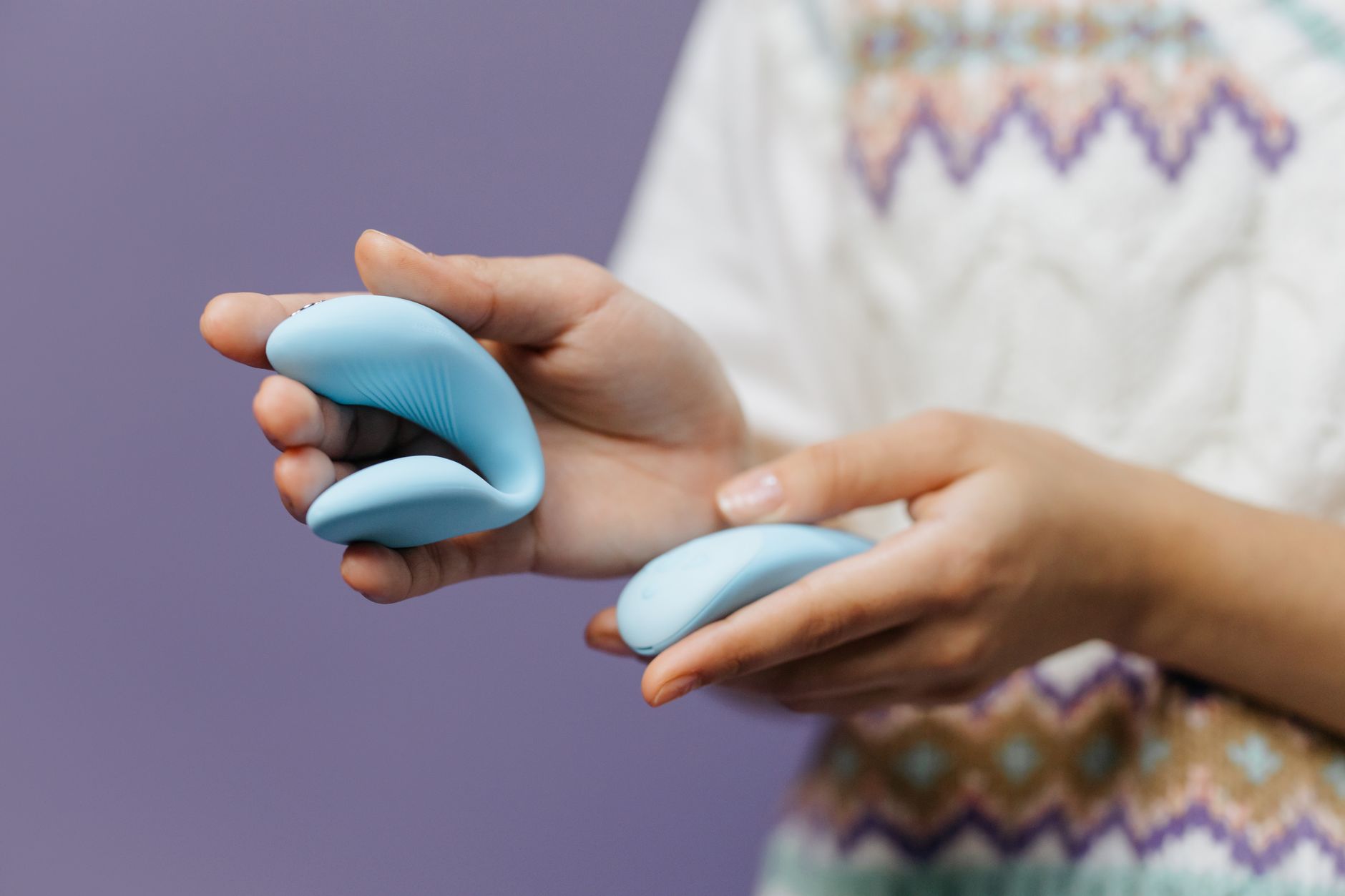
Yes, usually. Let them hold it, feel the weight, see how it works. Demystifying it removes some anxiety. Explain how lemon clitoral vibrators work differently from traditional vibrators. The suction mechanism means it's working through gentle pressure rather than intense vibration, which often feels different than they expect. Seeing the actual device is less abstract and scary than imagining it.
Then it doesn't feel good, and you try something different next time. Or you use it solo and partner sex stays as it is. Not every experiment works. The goal isn't to force a particular outcome. The goal is to have explored together, which strengthens trust regardless of whether the toy becomes a regular feature.
It varies wildly. Some couples incorporate toys naturally after one conversation and one try. Others take months of small steps. The timeline depends on how much shame or anxiety either partner is carrying, and how much reassurance feels needed. There's no "correct" timeline. Frequent, low-pressure check-ins help more than any deadline.
Absolutely. When you're exploring solo pleasure for the first time, the Lem works beautifully as a single-person tool. Your partner's comfort with partnered use doesn't dictate what you do alone. That's your private experience, and it's completely separate. However, if you're keeping it secret from your partner when you could be honest about it, that might be worth examining. Secrecy in sex often creates distance faster than any toy introduction would.
Early in a relationship, there's usually more curiosity and less entrenched patterns. Later in a relationship, there's more vulnerability but also more trust. The conversation might be easier or harder depending on the couple. What matters is that you're choosing to deepen intimacy together, and that doesn't require a specific timeline. Some couples wait years and it becomes a turning point. Others try toys early and they become just part of the toolkit. Neither is wrong.
If you're ready to have this conversation, start small. Pick a calm moment. Use your own words. Listen to what your partner is actually worried about, not what you think they should be worried about. Most resistance dissolves once you understand the story they're telling themselves.
Your pleasure matters. Your partner's comfort matters. Those things aren't mutually exclusive. They just require honesty and patience, which is what partnership actually is.
If you're still finding the conversation stuck, or if you need support navigating relationship dynamics around desire and intimacy, reach out to us. We're here to help.