
The real problem with desire mismatch
One partner wants sex three times a week. The other's comfortable with once a month. Nobody's broken. Nobody's wrong. But the gap between them? That's where couples get stuck.
I've worked with hundreds of couples where desire mismatch became the thing they stopped talking about because every conversation ended the same way. "You want it more than I do" or "You never seem interested anymore." Both people retreat. Resentment builds. Sex stops feeling like connection and starts feeling like negotiation.
Here's what most couples don't realize: desire mismatch is often not about incompatibility. It's about misaligned expectations around what sex is supposed to do and feel like. A lemon vibrator, used intentionally as a couple's tool, can shift that entire dynamic.
Why desire actually differs between partners
Desire isn't a constant. It fluctuates based on stress, hormones, medications, past experiences, and whether you feel genuinely seen by your partner. The partner with "lower" desire isn't necessarily less sexual. They might be managing fatigue, body image concerns, or a genuine neurological difference in baseline sex drive.
The partner with "higher" desire often interprets this mismatch as rejection. Over time, they stop initiating. Both partners feel lonely, even in the same bed.
What shifts things is reframing desire mismatch from a problem to solve into a dynamic to navigate together. That's where tools like lemon vibrators come in. They're not about forcing enthusiasm. They're about creating space where both partners can explore pleasure on their own terms.
Why lemon vibrators work differently for desire-mismatched couples
Lemon clitoral vibrators are designed for directed, sustained stimulation. They work quickly. They work reliably. For the partner with lower desire, this matters because arousal doesn't have to be complicated or take forever. It can be straightforward and pleasurable without requiring your partner's sustained physical effort.
For the higher-desire partner, a lemon vibrator means you're no longer the only engine of pleasure in the room. You become a presence, a witness, a collaborator. That's often more connected than traditional intercourse anyway.
The shared experience of using a lemon clitoral vibrator together also does something unexpected: it removes the pressure narrative. If one person is using the vibrator on themselves while their partner watches or touches them elsewhere, the performance anxiety that often shows up in desire-mismatched couples starts to dissolve.
The conversation you need to have first
Before you introduce any toy, you need to separate two conversations that couples usually tangle together.
Conversation one: "I feel emotionally disconnected from you." Conversation two: "I want us to have more sex."
These sound related but they're not the same. One is about intimacy and presence. The other is about frequency. Couples often try to solve the first problem by addressing the second, which never works.
If the real issue is that you don't feel emotionally connected, more sex with a lemon vibrator won't fix it. You need to restore emotional intimacy first. That's conversations, time together, listening. That's not a toy problem.
If the real issue is frequency mismatch and both partners feel okay emotionally, then tools make sense. That's where introducing a lemon vibrator becomes useful instead of resentful.
Have that clarity conversation first. It takes maybe twenty minutes and saves months of frustration.
Introducing a lemon vibrator to your partner
Don't surprise someone with a vibrator. That's not spontaneous. That's presumptuous.
Instead, frame it as an experiment you're curious about together. "I read about lemon vibrators and I'm wondering if we might try one together. No pressure. Just curious." That's a conversation starter, not a demand.
Listen to their response without defending. If they're hesitant, ask why. Is it about body image? Feeling replaced? Worried it means you're not satisfied? These are the real conversations.
If they're open, shop together if possible. Let both of you see what appeals. Lemon clitoral vibrators come in different patterns and intensities. Some people prefer gentler stimulation. Some want more power. This choice belongs to both of you.
How to actually use a lemon vibrator when desire differs
Start with a conversation about what each of you wants from this. The lower-desire partner might say, "I like knowing we're doing this together but I need to go slow." The higher-desire partner might say, "I want to feel needed while you explore what feels good."
Both valid. Both important.
One approach: the lower-desire partner uses the lemon vibrator on themselves while the higher-desire partner is present. They might kiss, touch other body parts, talk. The person using the vibrator gets to focus on their own pleasure without worrying about their partner's satisfaction. This often reduces the performance anxiety that kills desire.
Another approach: the higher-desire partner uses the lemon vibrator on the lower-desire partner. This requires communication about pressure, speed, pattern. It also creates a role that feels less like "I want you to want me" and more like "I get to give you something that feels good." Different dynamic entirely.
A third approach: take turns. One person enjoys the vibrator while the other is present and attentive. Then you switch if you want to. No expectation that one encounter has to include both people's orgasms or satisfaction. Sometimes it's just about one person getting to feel really good while the other gets to witness that. That's intimate in a way many couples haven't experienced.
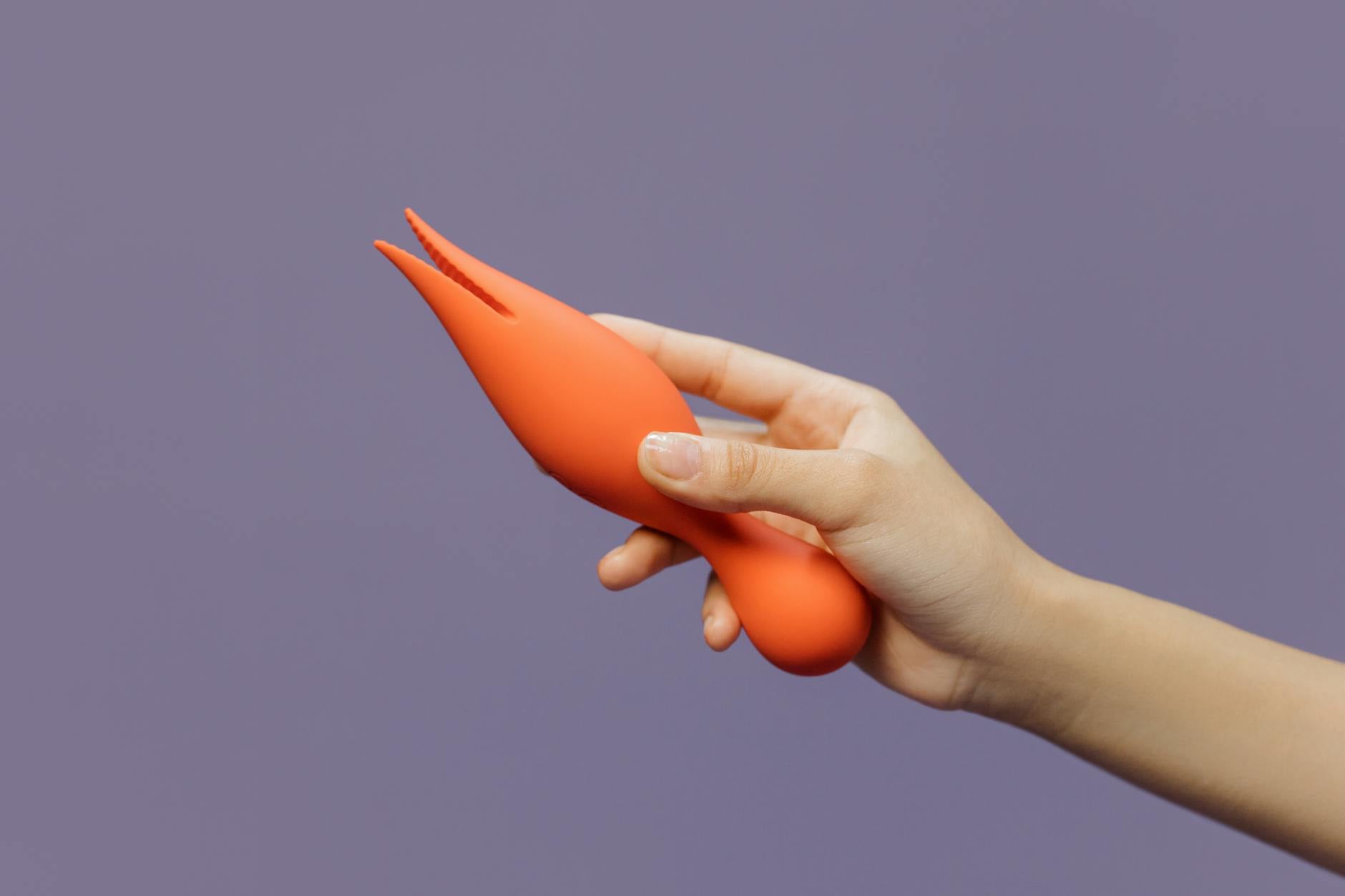
What changes when you use a lemon vibrator together
Honestly? The biggest shift isn't the vibrator. It's what the vibrator gives you permission to do: have a conversation about desire without shame.
Once you've introduced a lemon clitoral vibrator into your shared experience, you've already said, "Sex doesn't have to look like what we thought it should." That opens the door to everything else. To admitting that the higher-desire partner sometimes feels hurt. To the lower-desire partner saying, "I love you but my body doesn't want sex the way yours does."
Those conversations are uncomfortable. But they're the ones that actually fix desire mismatch. Not the vibrator. The vibrator is just the catalyst.
Many couples I work with report that using lemon vibrators together actually increased their overall physical connection. Not because the vibrator is magic. Because they're finally having sex on terms that work for both of them instead of constantly negotiating around incompatibility.
The patterns that show up (and what they mean)
If the lower-desire partner starts initiating more, great. But don't assume that's the goal. Sometimes the goal is just, "We have a way to be intimate that doesn't exhaust or frustrate either of us." That's enough.
If the higher-desire partner notices their resentment softens even though frequency hasn't changed much, pay attention. That usually means the quality of the connection shifted. That's not nothing.
If using a lemon vibrator together becomes a regular thing, you're essentially building a new intimate script together. You're no longer locked into the old pattern where one person is always the giver and the other is always the receiver. That flexibility changes everything.
When desire mismatch means something else entirely
Sometimes the real issue isn't vibrators or frequency. It's medication side effects. It's unprocessed trauma. It's depression or anxiety that kills arousal at the root.
If one partner has been on SSRIs for years and desire tanked, a vibrator might help with physical sensation, but the real solution is a conversation with their doctor. If someone's experienced relationship trauma, they might need therapy before shared pleasure tools make sense.
Use the vibrator as a starting point. If the underlying issue is physical or psychological, you'll know pretty quickly because the tool alone won't bridge the gap. Then you have real information to work with. You know you're dealing with something deeper. That's actually useful information.
What to remember when things feel stuck
Desire mismatch is one of the most common reasons couples get stuck sexually. It's also one of the most solvable once you stop treating it as a failure.
A lemon vibrator is a practical tool that says, "We're willing to try something different." That willingness is what matters. The vibrator is just the vehicle.
If you're the higher-desire partner, using a lemon clitoral vibrator together can help you feel less like the problem in the relationship. If you're the lower-desire partner, it can help you feel like sex is something you're choosing rather than something you're accommodating. Both of those shifts are worth it.
The couples I work with who successfully navigate desire mismatch usually have one thing in common: they stopped waiting for their desire to match and started building a sexual life that actually works for both of them. That's not compromise. That's design.
Frequently asked questions
Can a lemon vibrator actually help a relationship with mismatched desire?
A vibrator is a tool, not a therapist. But yes, lemon vibrators specifically can help because they create a different kind of intimate experience. You're no longer locked into the pattern where one person is always pursuing and the other is always declining. The vibrator gives you a way to explore pleasure together that doesn't require matching desire levels. That said, if the real issue is emotional disconnection, you need to work on that first. The vibrator works better when the emotional foundation is solid.
What if my partner thinks using a vibrator means I'm not satisfied with them?
That's real and worth addressing directly. Say something like, "I'm not bored with you. I'm curious about this because I want us to have more pleasure together, not instead of each other." Frame it as an addition, not a replacement. If they're still hesitant, give them time. You can't convince someone into openness. You can only invite them and let them decide.
Is it okay if only one of us uses the lemon vibrator?
Completely okay. Not every tool works for both people equally. Some partners love using lemon clitoral vibrators and some would rather not. The point is exploring what works for each of you, not forcing symmetry. If one person enjoys the vibrator and the other enjoys being present while they do, that's a win.
How do I bring up using a lemon vibrator without making it awkward?
Don't build it up as a big deal. Keep it light and curious. "I saw this thing and I'm kind of interested in trying it together if you are." Then listen to their response without defending your idea. Awkwardness usually comes from shame or pressure. If you're genuinely just curious and you're genuinely fine with them saying no, it won't be weird.
Will using a lemon vibrator change how often we have sex?
Maybe. Sometimes couples who use vibrators together report more frequent intimacy because the pressure is off and it feels more accessible. Sometimes frequency stays about the same but the quality improves. Sometimes nothing changes except that both people feel less resentful. Focus on what matters to you. If it's just more connection, the frequency might not matter as much as you thought.
What if we try a lemon vibrator and it doesn't help?
Then you've learned something useful: the problem isn't about access to tools or techniques. It's about something deeper. Maybe it's emotional. Maybe it's physical. Maybe it's a mismatch that's real and valid and doesn't have an easy solution. At least you know that now, and you can stop trying to fix it with vibrators and start addressing what's actually going on.
Desire mismatch feels like a relationship problem. Usually it's just a communication problem wearing a sexual disguise. If you're stuck on this, the first step isn't a tool. It's a conversation. But once you've had that conversation, a lemon vibrator can be a practical way forward. Start there.