
Let's talk about the thing nobody names
You're in bed. Things are building. Your partner is watching, waiting, rooting for you to get there. And suddenly the whole machine grinds to a halt. Not because you're not attracted. Not because something is wrong. But because the moment someone else is invested in the outcome, the outcome becomes impossible.
This is one of the most common friction points I see in my practice. And it's not a you-problem. It's a system problem.
Why pressure is kryptonite for arousal
Here's the neurology: your brain has two competing systems. One is the accelerator. The other is the brake. During sex, the accelerator is stimulation. The brake is distraction, self-consciousness, and the awareness that someone is watching you perform.
When your partner (or you, honestly) has expectations attached to your orgasm, the brake system lights up. Your body registers: "This isn't just for me. This is being evaluated." And when evaluation happens, climax often doesn't.
The research backs this up. Performance anxiety during sex is one of the most documented suppressors of orgasm. It doesn't matter how much you want to finish. It doesn't matter how much your partner wants it for you. Once the pressure is there, the neurochemistry works against you.

Photo by Ihsan Adityawarman on Pexels
The permission problem
This is where lemon vibrators shift things. Not because they're magical. But because they reframe whose pleasure is the point.
When you reach for a clitoral vibrator like the Lem, you're saying: "This is for me. Not for demonstration. Not for reassurance. For the specific architecture of my body and what actually works." That's not a small switch. That's the difference between performing and participating.
A lot of people feel hesitant to bring a toy in when a partner is there because it can feel like a statement. Like you're saying "What you're doing isn't enough." But the opposite is true. You're saying "Here's what I need to actually feel good." There's a difference.
How lemon clitoral vibrators break the performance cycle
Let me map out what changes:
The pressure drops because the goal shifts. Instead of "Can I come while my partner watches?", the goal becomes "Can I enjoy sensation without watching myself be watched?" That's a reframe, not a failure.
You regain control of the timeline. Lemon vibrators, especially suction-based ones, give you direct input over speed, intensity, and duration. You're not waiting for someone else's rhythm. You're setting it.
The expectation becomes mutual pleasure, not mutual performance. When you're using a toy solo or with a partner, the implicit agreement shifts from "make me come" to "let's explore what feels good right now." Sometimes that's an orgasm. Sometimes it's just sensation. Both are valid.
Arousal can actually build. When you're not monitoring whether you're "on track" to orgasm, your brain quiets down and your body can actually accelerate. It sounds backwards, but removing the goal often gets you there faster.
The conversation that needs to happen first
If you're partnered, this one matters. Before you bring a toy to bed, you need to talk about what it means. Not in a heavy way. But clearly.
Honestly, the best framing is: "My body works differently than I wish it did under pressure. I want us both to feel good. A toy helps me get there without the mental loop. This isn't about you. This is about me getting out of my own way."
A good partner will hear that. They'll understand that your pleasure is not their responsibility. It's collaborative, sure. But the ownership of your sensation sits with you.
If your partner resists, that's information. And it's worth a separate conversation about what the resistance is really about. Often it's insecurity. Sometimes it's a mismatch in how you each think about pleasure. But those are conversations to have before the toy is in your hand.
Using lemon vibrators when the pressure is internal
Here's the thing: sometimes the pressure isn't coming from your partner. It's coming from you.
You've read that orgasms are supposed to feel a certain way. You've had them feel different. You're wondering if something is wrong with you. You're trying to recreate a previous experience. You're performing for an imagined audience.
All of this is pressure. All of it suppresses arousal.
When you're using a clitoral vibrator solo, you get to completely dismantle that script. You get to discover what actually feels good without comparison. The Lem or other lemon sexual toys work particularly well here because they don't require you to do anything. You just hold it and let sensation build.
That simplicity matters. The fewer moving parts you're managing, the fewer opportunities your brain has to loop into performance mode.
The physical adjustments
Once you've given yourself permission, here's what actually works:
Start slower than you think you should. On the Lem, that's patterns 1 or 2. Your nervous system is still ramped up from the pressure conversation. Give it space to downshift before you ask for more intensity.
Don't set a time limit. I know this contradicts the "quickies" script. But when you're decompressing from pressure, open-ended time is essential. Budget 20 minutes minimum, knowing you might only need 10. The knowing you have time changes everything neurologically.
Let sensation be enough. You're not trying to cross a finish line. You're learning what your body wants when nobody is keeping score. Some sessions end in orgasm. Some don't. Both are data.
Use lube. This is less about physical need and more about permission. Lube says "We're taking time. We're being generous with this." It slows the process down, which is exactly what your nervous system needs.
What changes when the pressure actually lifts
Here's what I see happen in my office when couples work through this: orgasms often come back. Not because the toy is a magic wand. But because the person stops trying so hard.
When you remove the expectation, arousal rebuilds. When arousal rebuilds, climax follows. It's not automatic. But it becomes possible in a way it wasn't before.
Some people also discover that orgasms are less central to their pleasure than they thought. That's also completely fine. The goal here isn't to force a particular outcome. It's to reclaim the ability to feel good without performing.
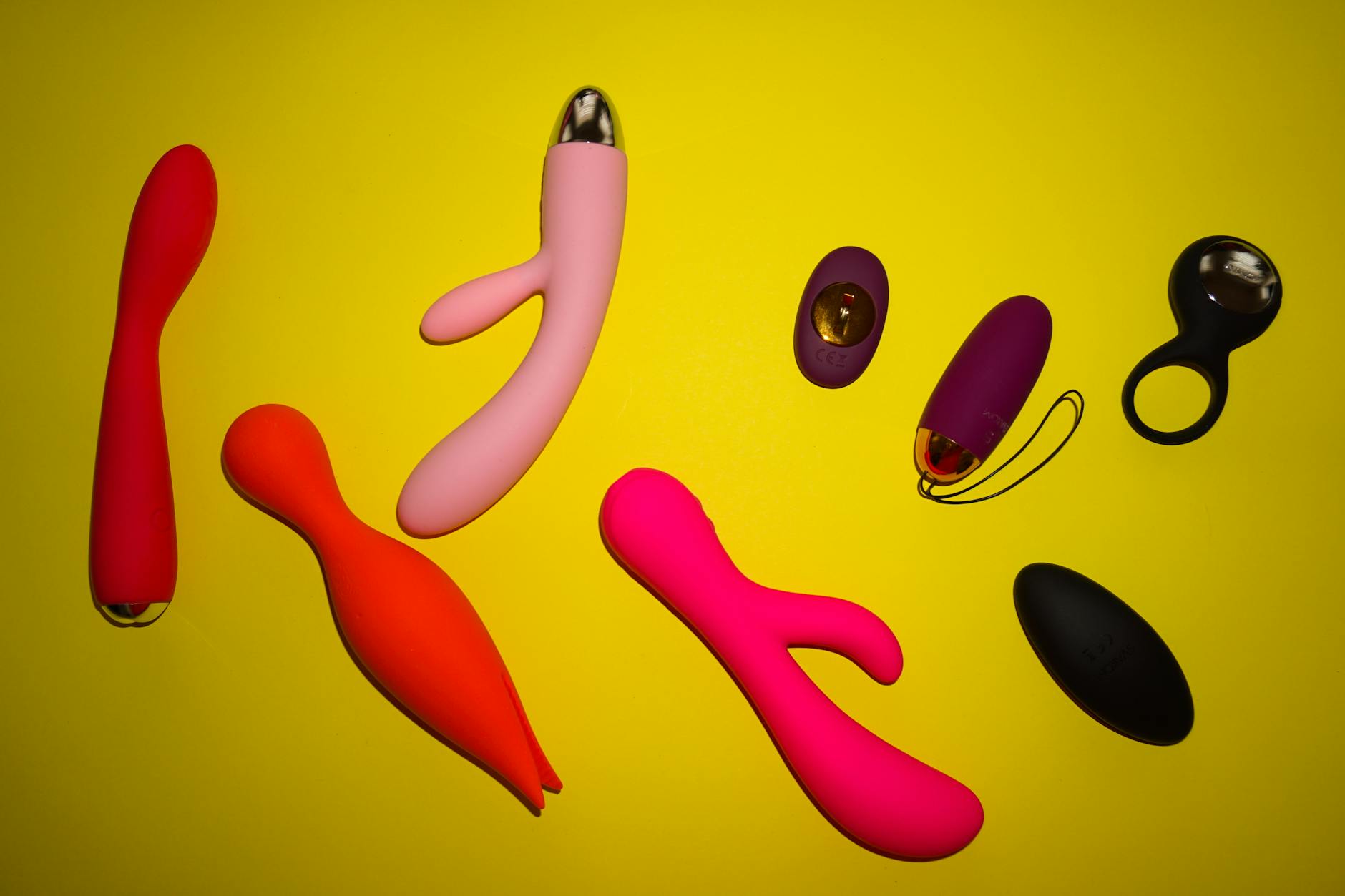
Photo by FounderTips on Pexels
Why this matters in long-term partnerships
Performance pressure doesn't just kill in-the-moment arousal. Over time, it erodes desire itself. You start to dread sex because sex has become a test you're failing.
When you introduce a tool that removes the pass-fail dynamic, something shifts. Sex becomes something you want to do, not something you're supposed to do. That's relationship gold.
A lot of couples I work with are shocked by how much desire comes back once they remove the pressure. It wasn't that they stopped being attracted to each other. It was that the framework made desire impossible.
FAQ
Can using a lemon vibrator make my partner feel left out?
Not if you frame it right. The biggest mistake is treating it like a secret or an admission of failure. Instead: "I want to show you what actually works for my body." Your partner gets to watch. They get to participate. They get to see you feel good. That's not left out. That's invited.
What if I can orgasm alone with a toy but not with my partner even when using it together?
That's incredibly common, and it's still progress. You've proven your body can get there. Now the work is about your nervous system feeling safe with another person present. That's a separate journey, and it often involves a lot of non-orgasm-focused touch and presence first. The toy will still be useful. But the goal shifts from climax to comfort.
Does using a lemon clitoral vibrator mean I don't need my partner anymore?
No. A toy is not a replacement. It's a tool that helps you understand and reclaim your own arousal. That actually makes partnered sex better because you're less dependent on your partner to deliver something that was never their job to deliver in the first place. Your pleasure is your responsibility. Your partner's pleasure is theirs. You meet in the middle.
How often should I be using lemon vibrators if I have pressure-based arousal issues?
As often as it feels good. There's no optimal frequency. Some people use them weekly. Some use them a few times a month. The point is: when you use them, you're practicing arousal without pressure. That rewires your nervous system over time. Even a few sessions a month does that work.
What if my partner refuses to accept me using a toy?
That's worth exploring separately. His discomfort is not your responsibility to fix. But it is information about whether your needs are being respected. A good partner wants you to feel good. If that desire isn't there, that's a relationship issue deeper than the toy. Consider talking to a couples therapist, or reaching out to me through our contact page.
Can lemon vibrators actually help if I've never had an orgasm?
Yes, but differently. Pressure is still the barrier. A toy removes distraction and gives you clear, sustained stimulation. That's useful. But if you've never orgasmed, the work is partly about discovering your body, and partly about giving yourself permission to be selfish about sensation. A toy helps with both.
Here's the truth: you deserve to feel good without performing. That's not selfish. That's not broken. That's human. When you use a lemon vibrator with that permission in place, everything changes. You're not trying to cross a finish line anymore. You're just learning how to feel. And that's when the good stuff actually happens.