Let's name what's actually happening
You're touching yourself. Your mind knows this should feel good. But there's a gap. The signal isn't getting through. Your body feels like it belongs to someone else, or like you're watching yourself from across the room. This is arousal disconnect, and it's far more common than anyone talks about.
It shows up differently for different people. Sometimes it's dissociation. Sometimes it's pure numbness. Sometimes your brain is interested but your body is muted, like someone turned down the volume on sensation. The mental and physical pieces aren't talking to each other. And honestly? That's incredibly frustrating.
Why the disconnect happens in the first place
There are a few reliable culprits. Stress is the heavyweight. When your nervous system is in fight-or-flight mode, it shuts down pleasure pathways to redirect resources. Your body is literally choosing survival over sensation. You can't think your way out of this.
Trauma, including sexual trauma, does something more complex. Your nervous system learned to disconnect as a protection strategy. Arousal can trigger a freeze response before pleasure ever gets a chance to register. This isn't a character flaw. It's a survival mechanism that's now running the wrong program.
Anxiety plays a similar game. The part of your brain monitoring for threat stays hyperactive, so the part that could relax into pleasure never gets the green light. You're stuck in witness mode, observing your own body from a distance.
Some medications flatten sensation across the board. Others just make arousal harder to reach. Some people describe it as touching themselves through a glove. The physical capacity is there, but the intensity is muffled.
Lifestyle chronic stress, grief, relationship tension, burnout. These accumulate quietly, and one day you realize you haven't felt genuinely turned on in months. The disconnect isn't sudden. It's a slow fade that you don't notice until you do.
Why sensation-building tools matter here
Here's where lemon vibrators shift the game. Most people think vibrators are about intensity. Wrong. For arousal disconnect, they're about precision and feedback.
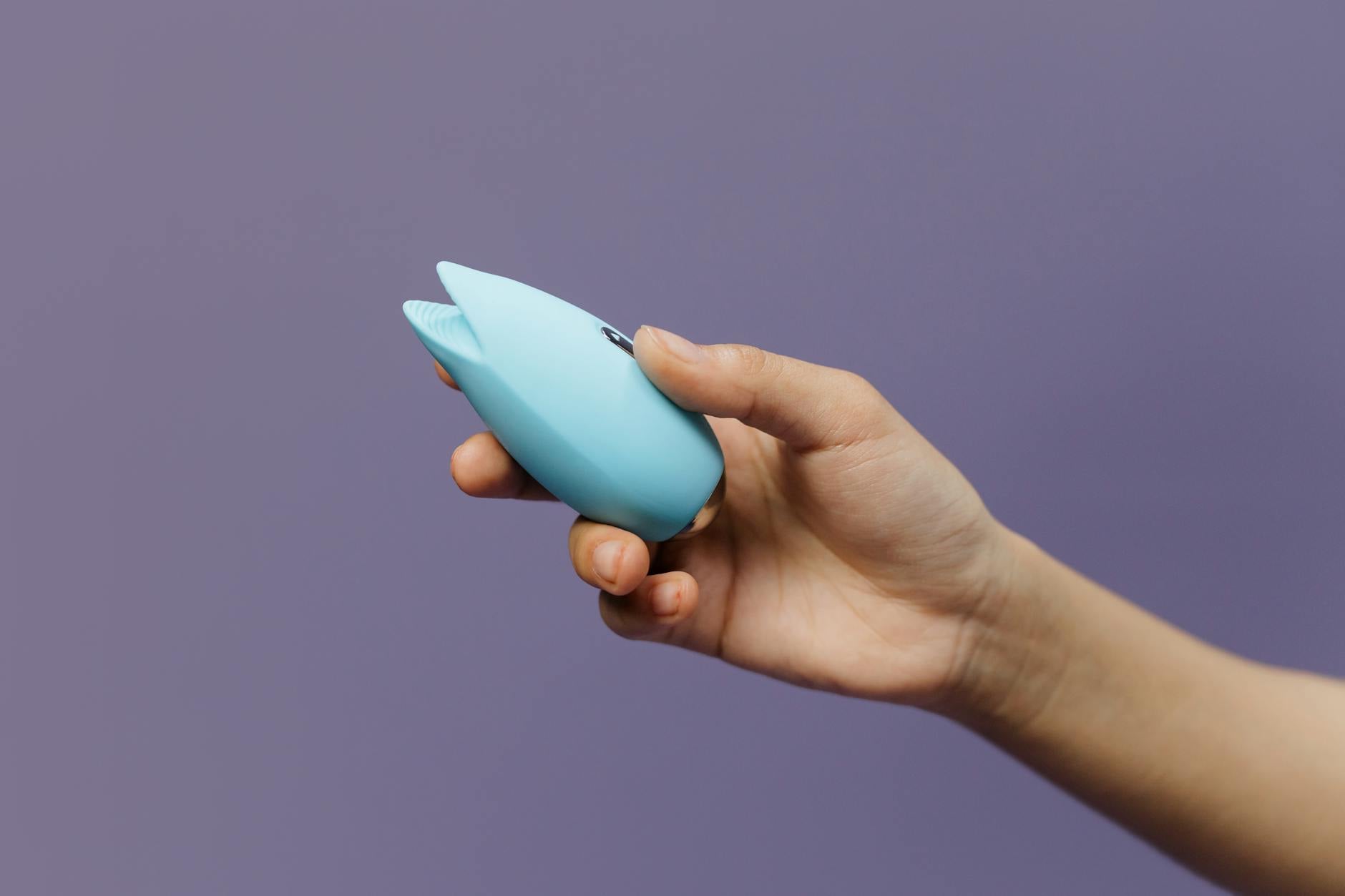
The Lem, specifically, uses air-pulse stimulation instead of traditional vibration. This creates a suction sensation that reaches deeper nerve endings and builds sensation gradually rather than jolting it. You're not forcing pleasure. You're giving your nervous system a pathway back in.
The graduated intensity matters wildly. You start at pattern 1 (barely perceptible) and your nervous system can slowly learn that this sensation is safe and pleasurable. There's no threshold to jump. Just incremental signals that yes, this body can still feel things.
That physical feedback is crucial for rebuilding the mind-body bridge. When you use a clitoral vibrator consistently, you're training your brain to expect and anticipate sensation. Over time, the disconnect starts to close.
The practical framework for reconnecting
Step one: Set the environment to its actual minimum. Not dim lighting and candles if that feels performative. Boring is fine. You're rebuilding trust with your own body, not impressing anyone.
Low pressure. Seriously. Tell yourself you're not trying to come. You're not testing whether pleasure works. You're just exploring sensation. The goal is zero. This takes the performance pressure off.
Step two: Start with your body, not the toy. Spend 5-10 minutes touching yourself without anything inserted or on you. Hand on your chest, your belly, your inner thigh. Notice where sensation lives and where it's numb. You're mapping the territory.
Step three: Introduce the Lem at the lowest setting. Hold it near, not on, your clitoris. Let your body adjust to the presence of it. Pattern 1 on a lemon clitoral vibrator is genuinely mild. You might not feel much. That's okay. You're not supposed to feel overwhelmed.
Step four: Stay present with what you actually feel, not what you think you should feel. This is where people fail. Your brain wants to feel pleasure immediately, so it manufactures a narrative about how great this is. Reject that. Notice the actual sensation. Pressure. Warmth. Tingling. Numbness (yes, notice that too). No judgment.
Step five: Slow progression. If pattern 1 feels safe after a few days, move to pattern 2. If you're connecting with sensation at pattern 3, stay there for a week. There's no timeline. Your nervous system will tell you when it's ready to go deeper.
Most people reconnect in 2-4 weeks of consistent practice. Consistent means 3-4 times per week, 10-15 minutes, no performance pressure. You're rebuilding a neural pathway. That takes repetition.
When disconnection is also dissociation
If you find yourself watching yourself from outside your body, or if the experience feels dream-like or unreal, pause. That's dissociation. Lemon vibrators can still help, but the framework changes slightly.
Focus on grounding first. Feel the toy in your hand before it touches you. Notice the temperature of the room. Name five things you can see. Feel your feet on the floor. You're anchoring back into your body deliberately.
Then use the vibrator at the absolute lowest setting, and keep one hand on another part of your body. Your other hand, your chest, your thigh. Dual sensations help interrupt dissociation because they demand your brain register multiple locations at once.
If dissociation intensifies, stop. This isn't failure. It means your nervous system isn't ready yet, and that's information. A therapist who specializes in trauma (particularly EMDR or somatic therapy) can help prepare your system for reconnection.
The conversation if you have a partner
Let's say you're in a relationship and arousal disconnect is affecting both of you. This needs its own conversation, separate from the pleasure-rebuilding work.
Your partner needs to understand: this isn't about them. It's not a reflection of attraction or desire for them. It's your nervous system needing to recalibrate. When you frame it that way, it stops feeling like rejection.
Then, separately, you can invite them into this process or keep it solo. Both are fine. Some people reconnect faster alone. Others benefit from a trusted partner's presence as part of the safety signal. There's no single right answer.
What matters: agree upfront that you're not aiming for orgasm during this rebuilding phase. If it happens, great. If not, completely irrelevant. You're tracking sensation and presence, not performance.
When to bring in professional support
If the disconnect doesn't ease after 4-6 weeks of consistent practice, or if it's tied to trauma, a somatic therapist or sex therapist trained in nervous-system work is worth the investment.
They can help you understand whether this is dissociation, a physical response, anxiety, or something else entirely. They can teach grounding and embodiment techniques tailored to your specific disconnect pattern.
They can also help if your partner is struggling with the impact on your shared intimacy. Couples therapy isn't just for crisis. It's preventive maintenance when one person's nervous system is out of sync.
You deserve to feel at home in your own body. That's not a luxury. That's a baseline.
FAQ on arousal disconnect and lemon vibrators
Why does arousal disconnect happen more during stress?
Stress keeps your nervous system in a protective state. Your body prioritizes survival signals over pleasure signals because from an evolutionary angle, orgasm is a luxury when threat is present. Once your system feels safe again, arousal pathways can reopen.
Can I use a lemon clitoral vibrator if I have trauma?
Yes, but start low and slow. If you have sexual trauma specifically, working with a trauma-informed therapist alongside physical reconnection helps your nervous system stay regulated. They can teach you grounding techniques to use before and after.
How long before I feel something with the Lem at the lowest setting?
Most people notice some physical sensation within 3-5 sessions. The sensation might be subtle. Tingling, pressure, mild warmth. Don't expect fireworks. You're looking for signal, not intensity.
Is it normal to feel nothing for weeks?
Yes. If your disconnect is deep, your nervous system might need 4-6 weeks to believe touch is safe again. This is actually a sign that consistent practice is working, not that it isn't.
What if sensation comes back unevenly?
Completely normal. You might reconnect to physical sensation before pleasure itself returns. You might feel one type of stimulation but not another. Your system will integrate over time. Keep the pressure off.
Should I tell my partner I'm using lemon vibrators for reconnection?
If you're partnered and this is about shared intimacy, yes. Transparency helps. You're not hiding anything; you're doing active work to show up more fully. That's vulnerable and worth honoring.
The bottom line
Arousal disconnect isn't a flaw in you. It's information from your nervous system that something needs attention. A lemon clitoral vibrator isn't a quick fix. It's a precision tool for rebuilding the neural pathways between mind and body.
The Lem's air-pulse design and graduated intensity make it particularly useful for this work because it meets your system where it actually is, not where you think it should be. Start low. Stay patient. Notice what's real, not what you think should be real.
Your body will reconnect. It just needs time, safety, and the right support. That's worth the investment.
If you're struggling with persistent disconnection or trauma-related arousal issues, reach out to a therapist who specializes in somatic or sex therapy. You don't have to do this alone.