Let's name what's actually happening
Anxiety and arousal live in different nervous system states. You can't be in deep relaxation and high alert at the same time. Your body simply won't cooperate. When your brain is scanning for threats, your clitoris goes quiet. That's not a character flaw. That's biology.
The irony is brutal: you want pleasure precisely because you're anxious, but anxiety is the exact thing blocking your access to it. And that frustration? That layers more anxiety on top.
Here's what I see clinically. People with anxiety often believe the fix is willpower or distraction. They think if they just relax harder, or focus better, or use the right vibrator, the block will dissolve. It doesn't work that way. Lemon vibrators and other clitoral vibrators are genuinely useful tools, but only after you've addressed the nervous system piece first.
How anxiety actually blocks desire
Your autonomic nervous system has two major modes. The parasympathetic system is rest-and-digest. The sympathetic system is fight-or-flight. Sexual arousal requires parasympathetic dominance. Your heart rate stays lower, blood flow redirects to your genitals, your pelvic floor softens, and your brain gets quiet enough to notice sensation.
When anxiety is active, your sympathetic nervous system is running the show. Your heart races, blood concentrates in your limbs (ready to run or fight), your pelvic floor tightens defensively, and your brain is too busy scanning for danger to register pleasure.
This is especially true for people with generalized anxiety, health anxiety, or trauma histories. Their nervous systems are primed for threat. It takes real work to downshift into parasympathetic mode.
The three-part setup that actually helps
Using lemon vibrators or any clitoral vibrators when anxiety is high is like trying to fill a bathtub with the drain open. The tool isn't the problem. The system needs preparation.
Part One: Nervous System Prep
Before you touch a vibrator, you need to signal safety to your nervous system. This takes 10 to 15 minutes and works best as a ritual you repeat, so your body recognizes the pattern.
Box breathing is the fastest entry point. Breathe in for 4 counts, hold for 4, exhale for 4, hold for 4. Repeat eight times. This directly activates the vagus nerve and shifts you toward parasympathetic dominance. Follow this with progressive muscle relaxation. Tense your toes for five seconds, release. Move up through your calves, thighs, belly, chest, shoulders, arms, and face. The point isn't relaxation perfection. It's teaching your nervous system that you're deliberately choosing safety.
If breathing feels impossible because your anxiety is acute, start with temperature. Hold ice cubes for 30 seconds or splash your face with cold water. This triggers the dive reflex and can interrupt a panic spiral within seconds.
Part Two: Embodied Presence
Once your nervous system has downshifted slightly, you need to anchor into sensation. Not sexual sensation yet. Physical sensation that's grounding.
Feel your feet on the ground. Wiggle your toes. Notice the texture of what you're sitting on. Run your hand over your arm and pay attention to the temperature difference between your skin and the air. These aren't tricks. They're ways of bringing your attention into your body in the present moment, which is the opposite of what anxiety does. Anxiety lives in hypotheticals and future disasters. Sensation lives in now.
Part Three: Introducing the Tool
Only after your nervous system has genuinely downshifted and your attention is in your body should you reach for a lemon clitoral vibrator or any vibrator.
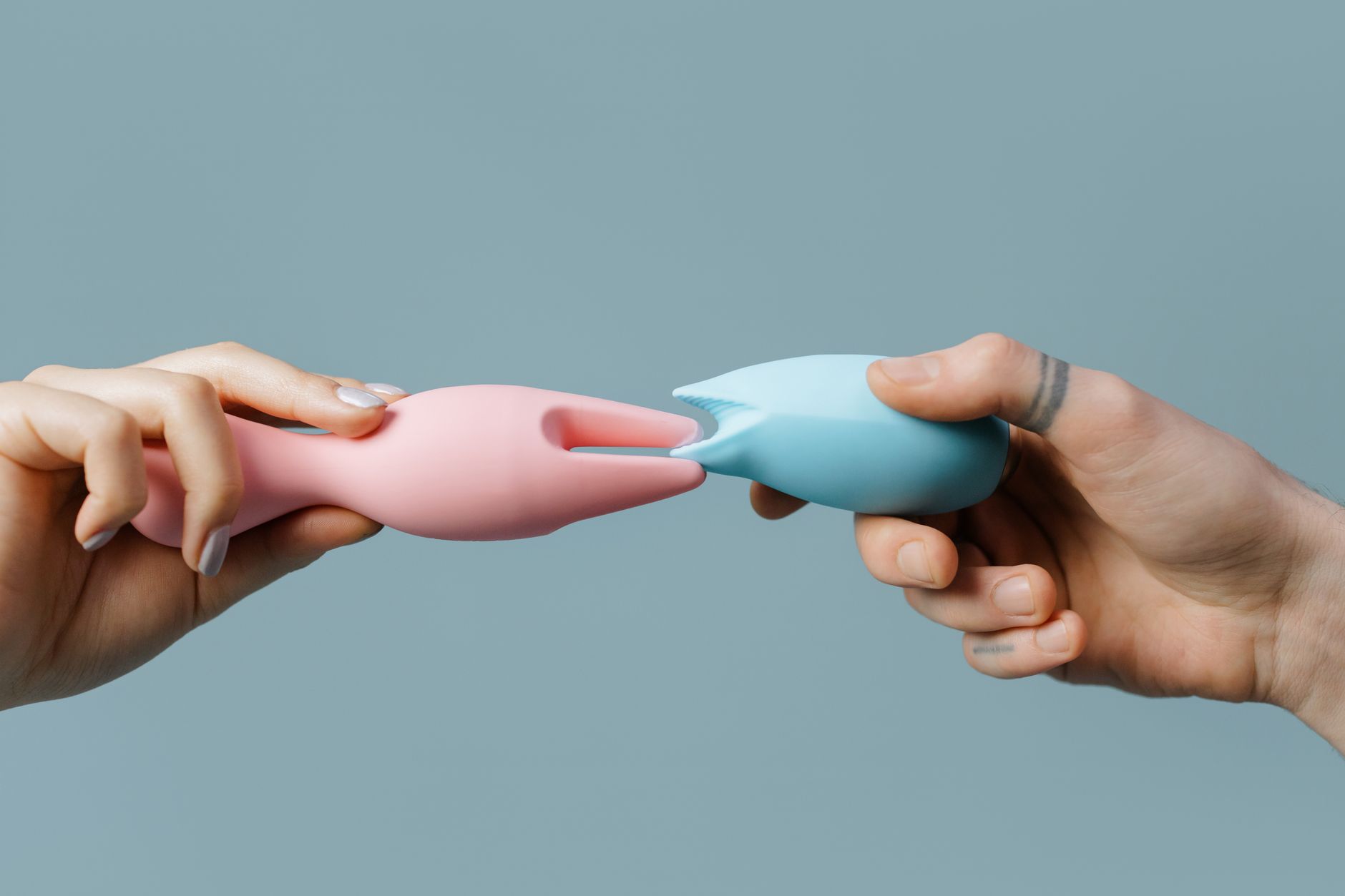
Start with the device off. Let your hand explore your own body without power. This keeps you in control and prevents overstimulation. When you're ready, turn it on the lowest setting. The lemon vibrator's design is particularly useful here because its suction-based stimulation is gentler than traditional vibration. It doesn't require the same pressure, so you can layer it in without jarring your nervous system back into alert mode.
When to pause and what that means
If you notice your shoulders creeping up toward your ears, your breath holding, or your mind racing back into worry, that's your nervous system giving you feedback. Stop. That's not failure. That's information.
Gently power down. Return to box breathing for two minutes. Then ask yourself: what shifted? Was it a thought? A physical sensation? A sound from outside? Identify the trigger. This matters because next time, you can plan around it.
Many people with anxiety benefit from noise isolation. A white noise machine or earplugs matter more than they'd expect. Some need darker rooms. Others need their partner out of the house entirely. These aren't luxuries. They're nervous system requirements.
Building confidence in cycles
Your nervous system learns through repetition. Approach this as a series of small wins, not a single session.
Session one might be: box breathing plus progressive muscle relaxation, no vibrator. Success.
Session two: same prep, then holding the lemon vibrator while it's off. Success.
Session three: same prep, vibrator on the lowest setting for two minutes. You're building a track record of safety. Your body begins to expect it.
Over weeks, you can gradually extend duration and increase intensity. The key is consistency, not duration. Fifteen minutes of actual parasympathetic work twice a week beats an hour of white-knuckling it once a month.
When medication is part of the picture
Many people managing anxiety are on SSRIs, which genuinely can dampen arousal and orgasm. This is a real side effect, not psychosomatic.
If you're on medication, talk to your prescriber about timing. Some people find taking their dose after planned pleasure sessions helps, though you need medical guidance here. Others explore whether a different medication might work with fewer sexual side effects. Others use vibrators precisely because the consistent stimulation can overcome the dampening effect.
There's no shame in needing additional support. Clitoral vibrators like the lemon sucker exist partly because they provide enough focused intensity to reach orgasm despite medication effects. That's not cheating. That's using tools effectively.
The partner conversation
If you're in a relationship, your partner needs to understand what's happening. Anxiety-blocked arousal isn't rejection. It's a nervous system state.
The most helpful thing a partner can do is remove pressure. "Let's schedule a time when I know the house is empty and I'm not worried about interruptions" is infinitely more useful than spontaneous sex when your mind is spinning. It's also okay to explore alone first. Solo pleasure with a lemon vibrator or other clitoral vibrators takes the performance pressure off entirely.
Many partners feel hurt when pleasure becomes separate from intimacy. Frame it differently: you're building capacity for pleasure, which eventually benefits both of you. Right now, that means individual nervous system work.
Moving forward, honestly
Anxiety doesn't mean you're broken or that pleasure is permanently unavailable. It means your nervous system needs a different approach than someone without anxiety history. That's workable. It's just different.
Lemon vibrators and clitoral vibrators are genuinely useful for this. The suction mechanism is less jarring than traditional vibration, making it easier to layer into a nervous system that's just beginning to calm. But the vibrator is step three, not step one. Steps one and two are about signaling safety and presence.
If you've been struggling with this pattern for months, consider working with a therapist who specializes in both anxiety and sexuality. There's excellent research on somatic therapy and trauma-informed approaches that can accelerate the process. You don't have to figure this out alone.