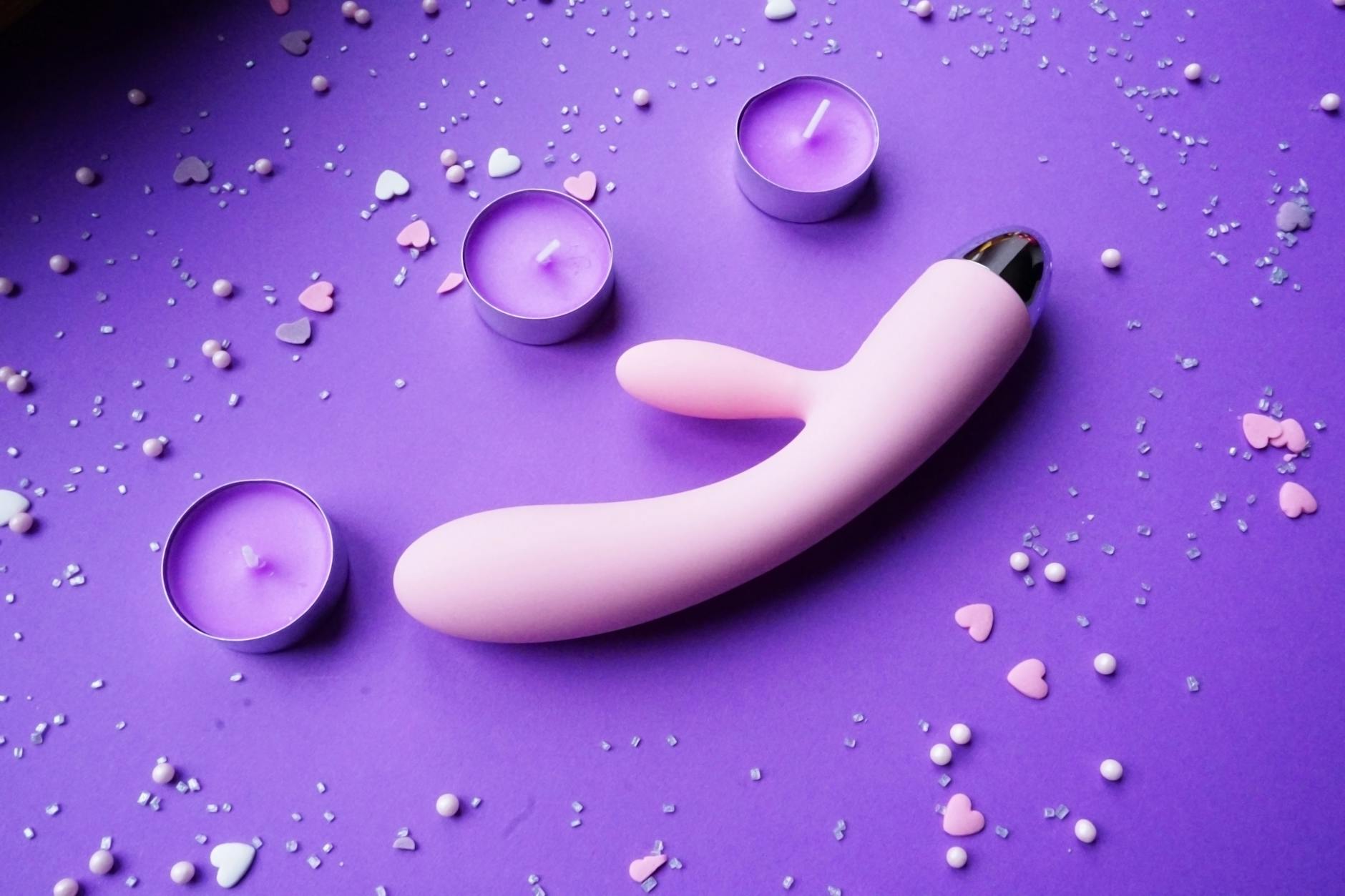
Let's talk about the elephant in the bedroom
Introducing your partner to sex toys is one of the most common conversations couples never have. You think about it. You research. You maybe add something to a cart and then delete it. Because the barrier isn't logistics. It's fear that bringing this up signals something is broken, or that they'll think you don't want them anymore, or that they'll feel inadequate. None of that is true, but the anxiety runs deep.
Here's what I've learned working with couples for two decades: the introduction matters more than the toy. The right framing, the right timing, and the right emotional setup can transform this from a loaded conversation into something that deepens intimacy instead of threatening it.
Why now is actually the right time
Most people delay this conversation until there's a problem. Low desire. Difficulty orgasming. Performance anxiety. Then toys feel like a patch on a wound instead of an exploration of shared pleasure. That's backwards.
The couples who integrate lemon vibrators and other adult toys most smoothly are the ones who do it from curiosity, not desperation. They're not trying to "fix" anything. They're trying to expand something that's already working.
If your sex life is decent right now, that's actually when this conversation lands best. You're not framing it as "we need to solve a problem." You're framing it as "I want more of this, with you."
The pre-conversation setup
Don't lead with the toy itself. That's the biggest mistake. Leading with "I want to try a lemon clitoral vibrator" puts your partner on the defensive immediately because they don't have context.
Start with vulnerability instead. This works:
"I've been thinking about our sex life lately, and I really enjoy it. I also want to explore some new things together, and I'm not sure how to bring it up without it feeling weird. Can we talk about that?"
Notice what's happening here. You're acknowledging that the current situation is good. You're owning your own curiosity without making it sound like a complaint. And you're explicitly naming that this might feel awkward, which actually makes it less awkward because you're not pretending it isn't.
Timing is crucial. Not right after sex, when they're sleepy or vulnerable. Not during conflict. Not casually in the car or while they're distracted. Sit down when you both have space and aren't stressed. An evening when you're relaxed, maybe with a glass of wine, works well.
Moving from curiosity to specifics
Once they've heard the opening and haven't shut down, you can get more specific. But don't start with intensity. Start with sensation.
"I'm curious about trying something that feels different than what we usually do. I've been reading about suction toys, and the way people describe them sounds interesting. I want to experience that with you. What would you think about exploring that together?"
Notice you're focusing on sensation and novelty, not on what's missing. You're also opening it to a question, which invites their opinion instead of announcing a decision.
Your partner might say yes immediately. Great. They might ask questions. Even better. They might feel hesitant, defensive, or worried. That's real and common. Here's what those concerns usually are:
"Do you think I'm not enough?" This is the core fear. Reassure directly: "I'm attracted to you. This isn't about replacing you. It's about expanding how we explore pleasure together. I want to experience this with you because it's you I want to be with."
"I don't know how to use that." Perfect. "Neither do I. That's part of why I want us to figure it out together." Removing the performance pressure immediately softens resistance.
"That seems weird." Honest acknowledgment works: "It might feel weird at first. New things do. But weird and good aren't mutually exclusive."
The first lemon vibrator conversation
Once your partner has said yes or "let me think about it," you can introduce the actual toy. This is where a lemon vibrator or other suction-based adult toy makes sense to discuss specifically.
Show them how it works before you use it. Not in a clinical way. Just matter-of-fact: "It's not like traditional vibrators. Instead of friction, it uses suction patterns. People describe it as feeling more like oral sex than vibration. That's why it's interesting to me."
Let them hold it. Let them see the settings. Let them ask questions. A lot of the anxiety dissolves when something that felt mysterious becomes just a physical object in your hand.
If they're still hesitant, you can also suggest: "What if you tried it on me first? That way you can see how I react, and there's no pressure on you." This flips the dynamic. Instead of him needing to "perform" with a new tool, he gets to be curious about your response.
The actual first time
Don't make it a production. Don't light a hundred candles and announce "Tonight we use the new toy." Just weave it in naturally into sex you're already having.
You might start with foreplay as usual. At some point, suggest: "Want to try it now?" Keep it light. If it feels good, keep going. If it doesn't, you stop and move on. There's no failure state here.
Common first-time things to know:
Start on the lowest intensity. Seriously. I've had so many people use the highest setting first and then assume they don't like suction toys. You're not testing endurance. You're exploring sensation.
Water-based lubricant helps even on the first try, especially with lemon clitoral vibrators. It's not because anything is wrong. It's because suction toys work best when there's a gentle seal, and lube helps that happen more easily.
Talk during. Not deep conversations. Just "How does that feel?" "Want me to go faster?" "Does this intensity work?" Your partner gets reassurance that you're still present and thinking about them, not just in your own head.
Afterwards, debrief gently. Not as if you're filling out a survey. Just "That felt good. I liked when you..." Positive reinforcement matters. It normalizes the experience and makes your partner more willing to try again.
Addressing the partner who's hesitant
Some partners warm up immediately. Others need time. If yours is the latter, don't push.
Honestly though, the best thing you can do is lower the stakes. Frame this as exploration, not expectation. You're not saying you need this to be satisfied. You're saying you're curious and you'd like to explore it together, and you're patient about how that happens.
You might also suggest that they use a lemon vibrator on you while you use it on them. It's less about them "performing" and more about mutual pleasure. That subtle shift matters.
If your partner continues to resist after several conversations, that's worth exploring with a couples therapist. Resistance to toys sometimes signals something deeper: trust issues, sexual shame, control dynamics. You don't need to figure that out alone.
Building the practice
After the first time, you're not done. You're actually just beginning.
The couples who get the most value from lemon vibrators and other suction toys aren't the ones who use them once and put them away. They're the ones who fold them into regular sexual intimacy.
That might mean using them weekly. It might mean occasionally. There's no right frequency. But consistency helps normalize it. It stops being "the toy experiment" and becomes just another part of how you have sex together.
As you both get more comfortable, you might explore different patterns, different intensities, or different positions. You might discover that certain settings work better at certain times. You might find that using a lemon clitoral vibrator at the beginning of sex changes the whole flow. These discoveries happen over time, not in one session.
The emotional safety net
Here's what ties all of this together: your partner needs to believe that this isn't a referendum on them. That trying something new doesn't mean you're dissatisfied. That exploring pleasure together is different from needing someone to be a certain way.
That belief comes from how you frame things, from how you speak to them during sex, and from how you respond if something doesn't feel good.
If your partner says "I don't think I like suction," you don't argue or try to convince them. You say "Okay, that's useful to know. We won't use it then." Done. You're not trying to sell them on the toy. You're building trust that sex is a conversation, not a performance.
That's what makes couples who successfully introduce lemon vibrators different. They're not focused on the object. They're focused on connection.