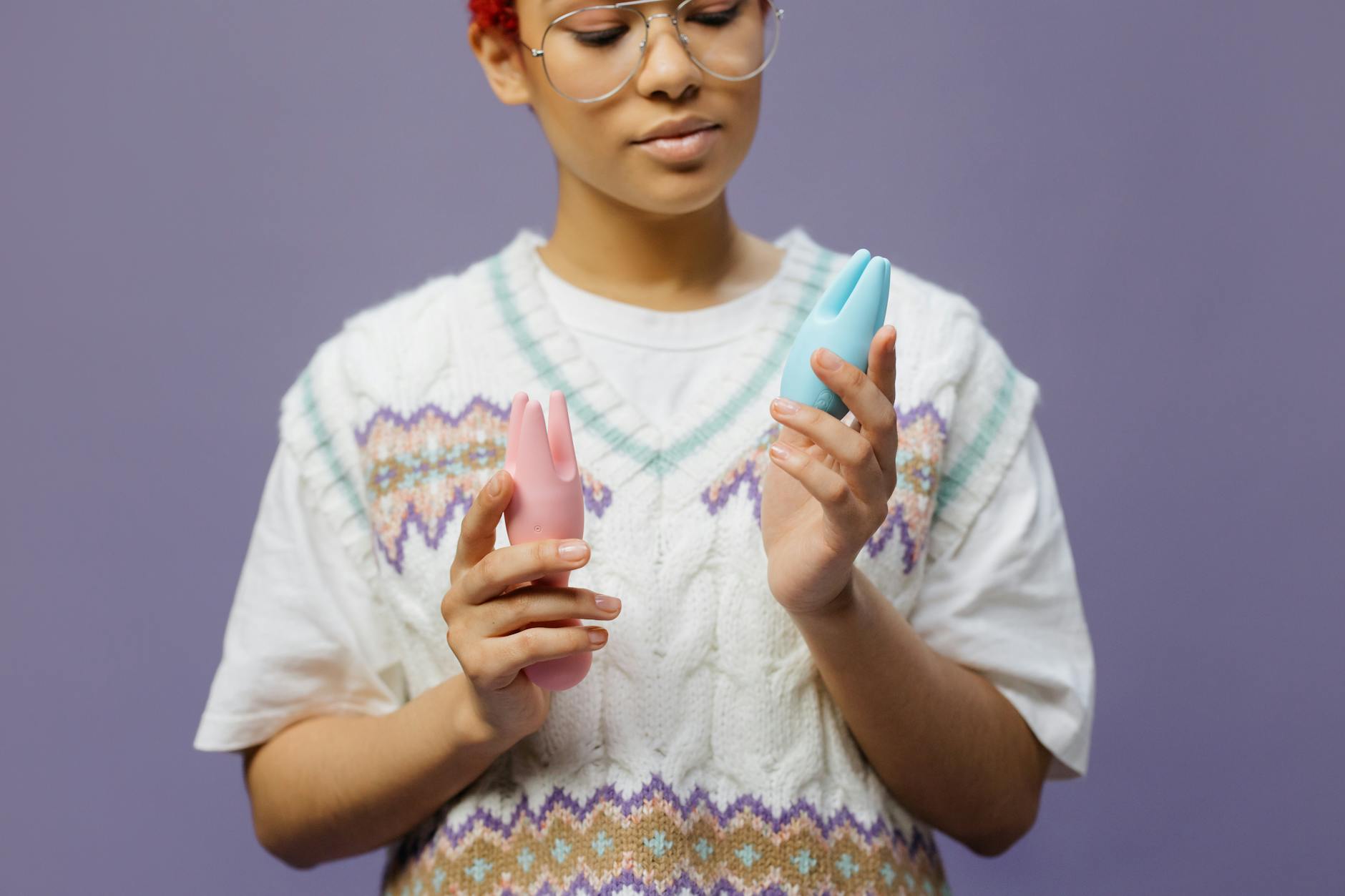
Why partners resist before they even try one
Let's be real. When you mention a lemon vibrator to your long-term partner, you're not just introducing a new toy. You're triggering a chain of anxieties that have nothing to do with the device itself. The resistance you're hitting isn't about vibration patterns or suction intensity. It's about what partners believe the toy means about them, about you, and about your relationship.
I've heard the same worry from hundreds of couples across decades of clinical work. It boils down to this: partners assume a lemon vibrator is a referendum on their performance. They think it means you're not satisfied. They think it means they're failing. And honestly? That fear makes perfect sense given how we talk about pleasure in long-term relationships. We don't.
The three fears underneath the "no thanks"
Fear 1: Perceived inadequacy. Your partner believes their body or their technique should be enough. A lemon vibrator feels like evidence that it isn't. This is rarely about ego in the macho sense. It's usually about love. They want to be the source of your pleasure. The toy feels like a replacement, not a tool.
Fear 2: Loss of control. Suction devices work differently than traditional vibrators. They create a sensation partners can't fully anticipate or moderate by touch. That unpredictability feels risky. If they can't see exactly what's happening or adjust the intensity with their hands, they worry about hurting you or losing the intimacy of direct contact.
Fear 3: Unspoken comparison. Long-term partners often assume that wanting a toy means you've been imagining someone else, or that you'd rather be with a different body. It's irrational, but it's powerful. The lemon vibrator becomes symbolic of a gap in the relationship that may not actually exist.
None of these fears are about the device. All three are about connection.
The conversation that actually shifts things
Here's what doesn't work: "I want us to try a lemon vibrator because it feels better." That sentence, no matter how gently delivered, lands as an indictment.
What works is reframing the entire thing as an expansion, not a replacement. This is the framework I use with couples in my practice.
Step 1: Lead with curiosity, not need. Start from a place of "I've been learning about clitoral vibrators and suction technology is fascinating" rather than "I want you to do this differently." You're inviting them into your discovery, not asking them to fix you.
Step 2: Explicitly name what doesn't change. Tell them: "I want you to know that trying a new toy doesn't mean I'm not satisfied with you or what we do together. It means I'm curious about exploring this with you." Then pause. Let them absorb that.
Step 3: Invite participation in the choice. This is crucial. Don't arrive with a purchased lemon vibrator and ask for forgiveness. Say: "If you were open to it, I'd love for us to research this together and pick something out." Shared agency dissolves the threat. He's not being asked to accommodate your needs; he's being invited to discover something together.
Step 4: Normalize sensations without pressure. Describe how suction works in plain terms: "It creates a gentle pressure rather than vibration. Some people find it feels more consistent and less intense on sensitive skin." You're educating, not seducing.
Step 5: Propose a low-stakes first try. Not foreplay with the full apparatus. Not performance mode. Something like: "Maybe we could just try it on a Sunday morning when we're relaxed, and you could see what it's like. No pressure to do anything with it." The informality and lack of expectation reduce the threat significantly.
What actually changes when partners try it
Once resistance softens and curiosity shows up, something unexpected often happens. Partners who were skeptical become genuinely interested because they observe something true: the toy doesn't replace them. It changes what pleasure looks like in a way that usually draws them closer, not further away.
When you use a lemon vibrator, your partner can touch your body differently. They can kiss you. They can look at your face. They can slow down and stay present in ways that penetrative sex or manual stimulation sometimes doesn't allow. The toy isn't removing them from the equation. It's opening a door to a different kind of attention.
Second, partners often notice that you're more relaxed. Anxiety dissolves. That alone shifts the dynamic. Many long-term relationships grow dull not because partners stop loving each other, but because one partner has resigned themselves to a lower level of satisfaction. The relief and openness that follows when pleasure is finally prioritized rewires everything.
Third, your partner's anxieties often invert once they see the reality. Instead of feeling inadequate, they feel included. Instead of losing control, they find new ways to participate. The vulnerability shifts from "Am I enough?" to "How can we enjoy this together?"
The role of a lemon clitoral vibrator specifically
If your partner is still hesitant, the specific design of a lemon vibrator can help ease concerns. Unlike traditional vibrators, which rely on buzzing friction, suction-based toys like the Lem work through gentle pressure changes. Partners find this less intimidating for a few reasons.
First, the sensation is localized and consistent. Your partner can hold and control it as easily as any other toy, without worrying about angles or intensity spikes.
Second, suction technology doesn't require the same kind of direct friction that can feel overwhelming or sore over time. This often means longer, more comfortable sessions, which partners intuitively understand as a good sign.
Third, the aesthetic of a lemon vibrator is less clinical. It's softer, rounder, less explicitly "toy-like" than a traditional wand or vibrator. This subtle difference actually matters in conversations with resistant partners. It feels less like introducing a third party and more like adding a new dimension to something you're already doing together.
When resistance is really about something else
Sometimes the stated reason your partner resists is not the real reason. If they've consistently shut down conversations about pleasure, or if they rarely initiate sex, or if they've told you your pleasure isn't important to them, the lemon vibrator isn't your problem. Your problem is a deeper incompatibility or disconnection that a toy won't fix.
In those cases, the conversation isn't about the device. It's about whether your partner is willing to prioritize your satisfaction. A therapist trained in couples work can help you have that conversation in a way that doesn't devolve into blame.
But if your partner is generally open, generally loving, and just anxious about this specific thing? The framework above works remarkably often.
One more thing: let them lead sometimes
Once your partner moves past resistance, consider letting them surprise you. Some of my clients report that once their partners got curious, the partner wanted to buy a toy to use on them. Or wanted to try it during specific kinds of foreplay. Or wanted to set the pace.
When partners move from defensive to curious, they often become surprisingly invested in getting it right. Let that happen. The toy becomes something you're doing together, not something you're doing to the relationship.
Frequently asked questions
Can introducing a lemon vibrator save a struggling relationship? Not on its own. But it can open a conversation about pleasure and attention that sometimes unlocks deeper intimacy. If your relationship is already healthy, adding a new tool often strengthens it. If it's deeply fractured, the toy becomes a symptom, not a cause.
What if my partner tries it once and doesn't want to use it again? That's okay. You've gathered information. Some partners prefer to observe or participate in other ways. The goal isn't to create a suction toy enthusiast. It's to expand what's possible between you.
Is it normal for long-term partners to resist pleasure innovation? Incredibly normal. We're taught that stable relationships mean static pleasure. That's false. The couples who report the highest satisfaction are often the ones who stay curious and willing to experiment together, whether that's a lemon clitoral vibrator or something else entirely.
How do I bring this up if we've never talked about toys before? Start earlier in the relationship than you think you should. But if you're already long-term, the conversation opener I'd use is: "I've been reading about clitoral health and pleasure, and I realized we don't really talk about this. I'd like to." Normalize the conversation first. The specific toy comes later.
What if my partner thinks I should be satisfied with what we have? This is a values conversation. Your pleasure matters. If your partner fundamentally believes that your satisfaction is your responsibility alone, or that asking for innovation is somehow disloyal, you're dealing with a belief system that goes deeper than vibrators. Consider whether this dynamic shows up elsewhere in your relationship, and whether you want to stay in a partnership where your needs feel like burdens.
Can we use a lemon vibrator together, or is it just for solo use? Both. Some couples use them during partnered play. Others use them separately. The beauty of a lemon vibrator is its versatility. Your partner might hold it while you guide them. You might use it while they touch you elsewhere. There's no script.
Will my partner feel left out or replaced if I use a toy during sex? Only if you make it feel that way through how you introduce and use it. If the toy is integrated thoughtfully and you're still present and engaged with your partner, most respond with genuine curiosity. The key is including them in the decision-making upfront, not springing it on them mid-session.
The bottom line
Long-term partners resist lemon vibrators because they feel risky. But the actual risk isn't to the relationship. It's to the status quo. When you introduce a new tool for pleasure, you're saying that satisfaction matters enough to prioritize. You're saying you're willing to be vulnerable and experimental. You're saying the relationship is worth evolving.
Most partners, once they understand that, move from fear to curiosity. And that shift changes everything.
If you're ready to have this conversation and want to understand your options, our buying guide walks through how different lemon sexual toys work and which might feel right for your partnership. And if you'd like to talk through relationship dynamics that are making pleasure conversations harder, reach out. That's what I'm here for.