
Let's talk about what stress actually does to desire
Stress doesn't just mess with your mood. It hijacks your nervous system, floods your body with cortisol, and tells your brain that survival matters more than pleasure. When you're in that state for weeks or months, your body literally forgets how to respond to touch. Sensation dulls. Arousal stalls. And then you feel broken, when really you're just stressed.
Here's the thing nobody explains clearly: low libido from chronic stress is not the same as low libido from depression, hormones, or relationship issues. The mechanism is different. The fix is different. And that matters because you're not going to think your way out of this, and you're probably not going to relax your way out of it either. You need to retrain your nervous system to recognize pleasure again. That's where sensation comes in.
Why stress crashes your sensation in the first place
When you're stressed, your parasympathetic nervous system (the one responsible for rest, recovery, and yes, arousal) basically goes offline. Your sympathetic system takes over, which is great if you're running from a tiger. Terrible if you're trying to feel a touch.
This isn't metaphorical. Your vagus nerve, which controls arousal and orgasm, stops signaling when cortisol is high. Blood flow redirects away from your genitals and toward your muscles and brain. Your clitoris becomes less engorged, which means less sensation. Your skin's responsiveness to light touch drops. Even your ability to focus on pleasure narrows because your brain is still half-scanning for threats.
Add to that the fact that stressed brains don't produce enough dopamine and serotonin, and you've got a recipe for sexual numbness.
The role of targeted sensation in nervous system reset
Here's what I've learned working with couples through high-stress periods: sensation, especially intense and localized sensation, can interrupt the stress loop faster than willpower or communication can.
When you use a lemon clitoral vibrator, you're sending a very specific signal to your nervous system: this stimulus is here, now, and it's safe. The vibration stimulates thousands of nerve endings in a concentrated area. Your brain has to respond to that information. It can't ignore it the way it ignores a partner's gentle touch when you're still in work-stress mode.
The suction-style stimulation that lemon vibrators provide is particularly useful for stress-related numbness because it creates sustained, rhythmic pressure that doesn't require you to be already aroused. You don't need to warm up psychologically first. The vibrator does the heavy lifting, and your body's natural responsiveness gradually re-engages.
Four ways stress specifically blocks lemon vibrator enjoyment
Before you can use sensation to reset, you need to understand how stress interferes with the experience itself.
One: Mental load. If you're still mentally at work, still running through tomorrow's calendar, your brain isn't available for pleasure signals. This isn't a moral failing. This is your nervous system doing its job. The fix: give yourself explicit permission to start small. Five to ten minutes, alone, with a lemon vibrator, just to notice sensation. Not to finish. Not to achieve. Just to notice.
Two: Tension holding. Chronic stress lives in your body as muscular tension, especially in your shoulders, neck, and yes, your pelvic floor. A tight pelvic floor compresses nerves and reduces sensation. You can't relax it through willpower when you're still stressed. But gradual vibration, started at a low intensity, helps teach that muscle to release. Starting with pattern 1 on a lemon vibrator and working up over minutes helps more than jumping to high intensity.
Three: Tactile defensiveness. Some stressed bodies actually become oversensitive to touch before they become numb. Anything can feel irritating. If that's you, water-based lubricant matters more than usual, and you may need to start at the lowest intensity setting. The goal is gentle, steady input that feels okay, not stimulating.
Four: Dopamine depletion. Stress burns through dopamine. Low dopamine makes everything feel flat, including pleasure. Vibration helps trigger dopamine release in a way that passive stimulation often doesn't. The intensity and novelty of a lemon clitoral vibrator is literally neurochemically different from a partner's hand.
Rebuilding sensation step by step
This isn't about forcing pleasure back. It's about creating the conditions for your body to remember how to respond.
Week one: noticing. Ten minutes, alone, with a lemon vibrator on the lowest setting. No goal except to feel the vibration. Notice what you notice. Does sensation build? Does it stay flat? Does it change over time? You're gathering data, not judging.
Week two: progression. Same setup, but move through settings 1, 2, 3 over the course of ten minutes. Spend a couple minutes at each level. You're teaching your nervous system that it's safe to engage more fully.
Week three: patterns. Lemon vibrators typically offer different vibration patterns, not just intensity levels. Try two or three. One might feel sharper, one rounder, one more rhythmic. Again, noticing, not performing.
Week four: presence. By now, sensation should be building back. You might notice arousal starting to show up. You might not. Either way, this is the week to practice staying present with sensation without chasing an outcome. If arousal comes, great. If it doesn't, you're still retraining your nervous system.
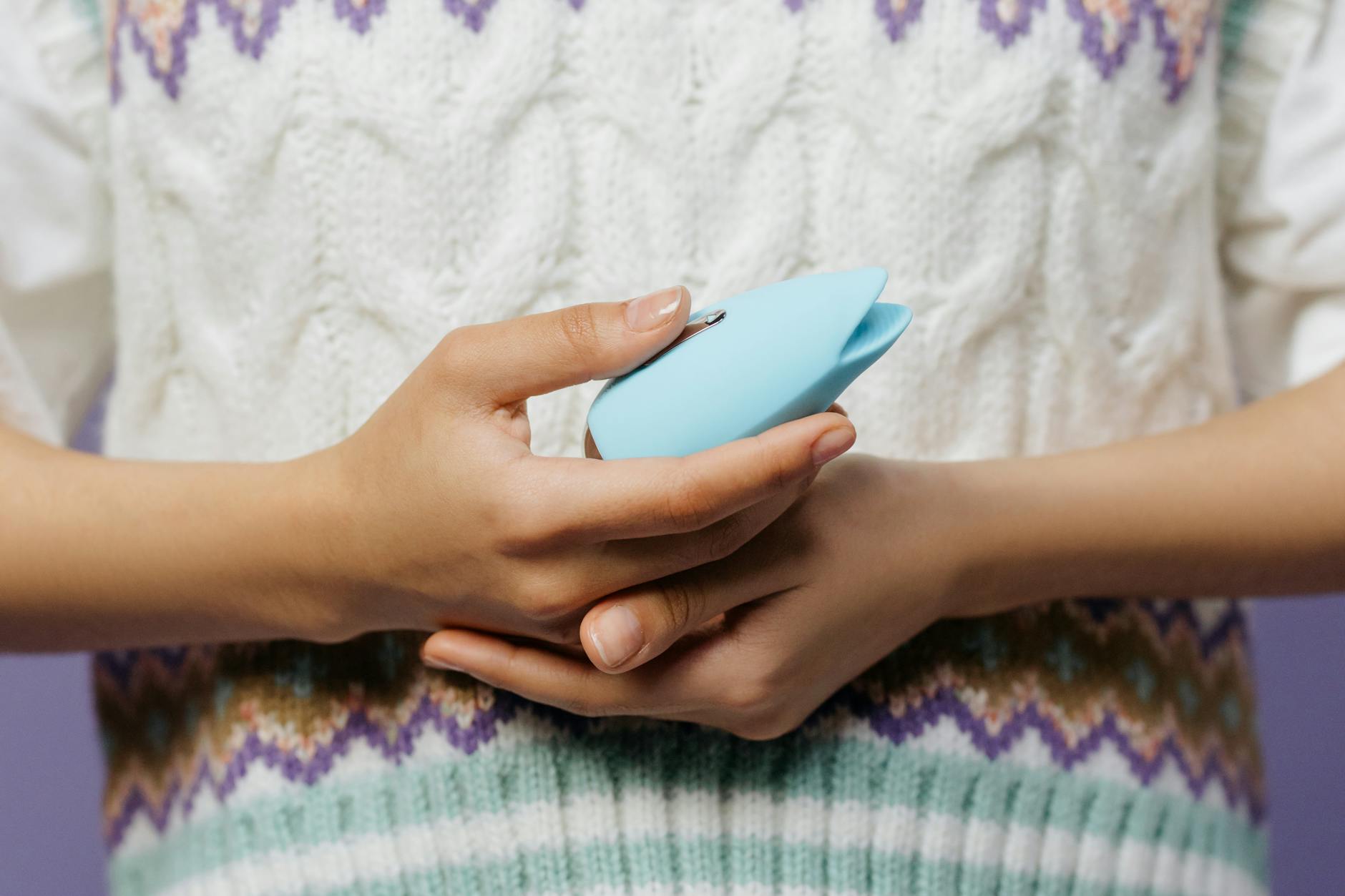
Photo by cottonbro studio on Pexels
When stress is also affecting your relationship
Here's the tricky part: if you have a partner, your low libido probably affects them too. They might feel rejected. You might feel guilty. That dynamic can actually keep you trapped in the stress response because now sex feels like an obligation instead of a pleasure.
One way to interrupt that: use solo sensation practice as a bridge. You're not avoiding your partner. You're actively rebuilding your capacity for pleasure. That's information you can share. You might even tell them, "I'm working on reconnecting with my body. I need some space to do that, and it's not about you." That honesty often relieves more pressure than you'd expect.
Once sensation is returning and you're feeling arousal more regularly, partnered sex becomes possible again without it feeling like a chore. Then the conversation can shift from "why don't you want me" to "let's rebuild this together."
What happens when stress lifts (and sensation returns)
One thing I've noticed: when people rebuild sensation deliberately through a practice like this, they often come out the other side with better body awareness than they had before the stress hit. You're learning what actually feels good instead of what you think should feel good. That's a gift.
Your lemon clitoral vibrator becomes less of a crutch and more of a tool you use intentionally because you know what it does for you. Some people keep using them regularly even when stress subsides. Others use them occasionally. The point is, you've broken the cycle where stress equals numbness equals shame equals more stress.
There's also often a secondary pleasure discovery here. People who've rebuilt sensation through solo practice frequently find that their partnered sex feels more connected afterward. Not because they learned a technique, but because they know what they like and they're not ashamed to be explicit about it.
People also ask
How long does it take to rebuild sensation after stress?
This varies wildly. Some people notice changes in two weeks. Others need a month or more. The key is consistency and patience. Stress didn't flatten your sensation overnight, and it won't rebuild overnight either. Think of it like rebuilding trust with your body. That takes time.
Can I use a lemon vibrator if I'm still stressed?
Absolutely. In fact, the act of using one is part of how you signal to your nervous system that it's okay to downshift into rest and pleasure. The vibrator isn't waiting for you to be calm. It's helping create the conditions for calm.
Does using a vibrator alone affect my relationship?
Not inherently. If your partner feels threatened by it, that's a conversation worth having. Most therapists actually recommend solo pleasure practice as a way to rebuild connection, not replace it. You're learning about yourself. That information helps both of you.
What if sensation still doesn't come back?
If you've been practicing for six weeks and sensation isn't improving, it might be worth talking to a doctor. Chronic stress can sometimes mask other things (thyroid issues, vitamin deficiencies, medication side effects). It's also worth checking if you're still actually under high stress. Rebuilding sensation requires your nervous system to feel somewhat safe. If you're still in crisis mode, that's the first thing to address.
Is a lemon clitoral vibrator better than other kinds for low libido from stress?
For stress-related numbness specifically, yes. The suction-style stimulation of lemon vibrators creates a different kind of sensation than other vibrators. It's more sustained, less reliant on you being already aroused, and tends to work well for people rebuilding sensation from scratch. That said, individual preference matters. If another type of vibrator feels better to you, that's your answer.
What if my stress comes back?
You'll know what to do now. You have a tool. You've proven to yourself that sensation can return. That knowledge alone reduces the panic that often comes with stress-related numbness. Some people find that keeping regular pleasure practice alive, even during non-stressful periods, helps them stay more resilient when stress does return.
The bottom line
Stress crashes your libido by crashing your nervous system. You can't think your way out of that. But you can use focused, pleasant sensation to help reset it. A lemon clitoral vibrator is a tool for that reset. It's not cheating. It's not a sign that something's wrong with you or your relationship. It's smart nervous system repair.
Your body wants to feel pleasure again. It just needs a little help remembering how.
Ready to rebuild your connection to sensation? We're here to help. Reach out at /contact if you have questions about which lemon vibrator might work best for you.
Sources
- American Psychological Association. (2023). "Stress and the body: Physiological effects of chronic stress." Monitor on Psychology.
- Brotto, L. A., & Smith, K. B. (2021). "Sexual desire and intimacy in women throughout adulthood." The Journal of Sexual Medicine, 18(2), 357-371.
- Porges, S. W. (2011). The polyvagal theory: Neurophysiological foundations of emotions, attachment, communication, and self-regulation. W.W. Norton & Company.
- Zheng, Y., Hart, C. M., & Hermann, A. D. (2021). "Stress, recovery, and sexual function." Current Sexual Health Reports, 13(3), 7-15.