
Let's name what happened
Relationship trauma rewires how your body responds to touch. It's not weakness. It's not broken desire. It's your nervous system doing exactly what it's supposed to do: protect you from further harm. When pleasure has been weaponized, weaponized in the form of coercion, crossed boundaries, or betrayal, your body learns to tense up, to withdraw, to say no before anything even starts.
The path back to pleasure isn't about forcing yourself to feel good again. It's about slowly, deliberately teaching your nervous system that touch can be safe, that you're in control, and that your pleasure matters on your own terms.
This is where lemon vibrators and other suction-based clitoral toys become unexpectedly powerful tools.
Why suction feels different after trauma
Traditional vibrators deliver stimulation through friction and pressure. That direct contact can feel invasive or triggering for people rebuilding after trauma. Suction-based toys like lemon vibrators work differently. They create a gentle seal around the clitoris and use rhythmic suction rather than direct friction. That distinction matters more than you might think.
The sensation is less forceful, less demanding of your body. You're not being worked on. Instead, you're being gently attended to. The suction pattern is predictable, which helps your nervous system relax. There are no surprise pressure spikes, no unpredictable rhythms. Control stays entirely with you: you choose the intensity, you choose when to pause, you choose when to stop.
For people whose trauma involved loss of bodily autonomy, that sense of control is therapeutic.
The nervous system piece
Here's what I see clinically: many people who've experienced relationship trauma are stuck in a hypervigilant state. Their parasympathetic nervous system (the one responsible for rest, arousal, pleasure) stays offline. The sympathetic nervous system (fight or flight) stays activated.
You can't think or feel your way out of that state. You have to regulate it somatically, through your body. Gentle, predictable touch from a tool you control is one of the fastest pathways back to parasympathetic activation.
Lemon vibrators and other suction toys are particularly useful because they:
- Create predictable, non-escalating sensation patterns
- Don't require interaction with another person (removing relational triggers)
- Allow you to start at minimal intensity and build at your own pace
- Don't demand a performance of pleasure
- Can be stopped instantly with zero negotiation
That last point is crucial. Many trauma survivors develop a deep distrust of their own "no." Proving to yourself, repeatedly, that you can stop a sensation immediately and be heard is genuinely healing.
Starting small: a practical map
If you're beginning to explore pleasure again after trauma, here's a realistic progression.
Week 1-2: Get familiar without turning it on. Hold the toy, feel its weight and texture. Let your nervous system recognize it as an object of pleasure, not pressure. This sounds simple. It's not. Your body may resist. That resistance is information, not failure.
Week 3-4: Lowest setting, external only. Don't apply it yet. Turn on the absolute lowest pattern and hold it near (not on) your body. Let your nervous system adjust to the sensation without direct contact. Some people need a week here. Some need a month. There's no schedule.
Week 5+: Gentle introduction. Apply it to the outer labia, never directly on the clitoris yet. Let arousal build slowly. If anything feels triggering, stop. Notice what triggered it. That information helps you understand your boundaries.
Later: Clitoral application. Many people skip straight here in regular pleasure exploration. After trauma, rushing this step often re-traumatizes. Take time.
Working with a partner (if you have one)
If you're in a new relationship or rebuilding with an existing partner, lemon vibrators can actually ease intimacy without adding pressure to perform.
Your partner isn't the one providing the stimulation. The toy is. This removes the dynamic where your partner might be watching, waiting for you to "get there," creating performance anxiety. You're focusing on your own sensation, your own timeline.
Many partners actually find this freeing too. They're not responsible for your pleasure. They're alongside it, supporting it, and often that removes a huge source of relational tension.
If your partner was the source of the trauma, skip this section entirely. Rebuilding pleasure solo is often the healthier first step.
When to involve a therapist
If flashbacks occur during pleasure, if you're experiencing numbness that doesn't shift, or if shame around pleasure is paralyzing, working with a trauma-informed therapist is valuable. Toys are tools, not treatments. A good therapist can help your nervous system regulate in ways that a vibrator alone cannot.
Suction-based clitoral vibrators like those from Hello Nancy are designed with your body in mind, but they work best alongside emotional processing, not instead of it.
The permission part
Here's what I tell every client rebuilding after trauma: your pleasure is not a reward you've earned for healing enough. Your pleasure is not contingent on being "over it" or "healthy enough." Your pleasure right now, at this moment, in this body, is legitimate.
You don't have to wait until you feel safe to start exploring. You can explore gradually and let safety build as you go. You don't have to perform desire for anyone. You don't have to apologize for taking time. You don't have to justify using tools to reconnect with your body.
Your body is not a problem to solve. It's a home you're learning to live in again.
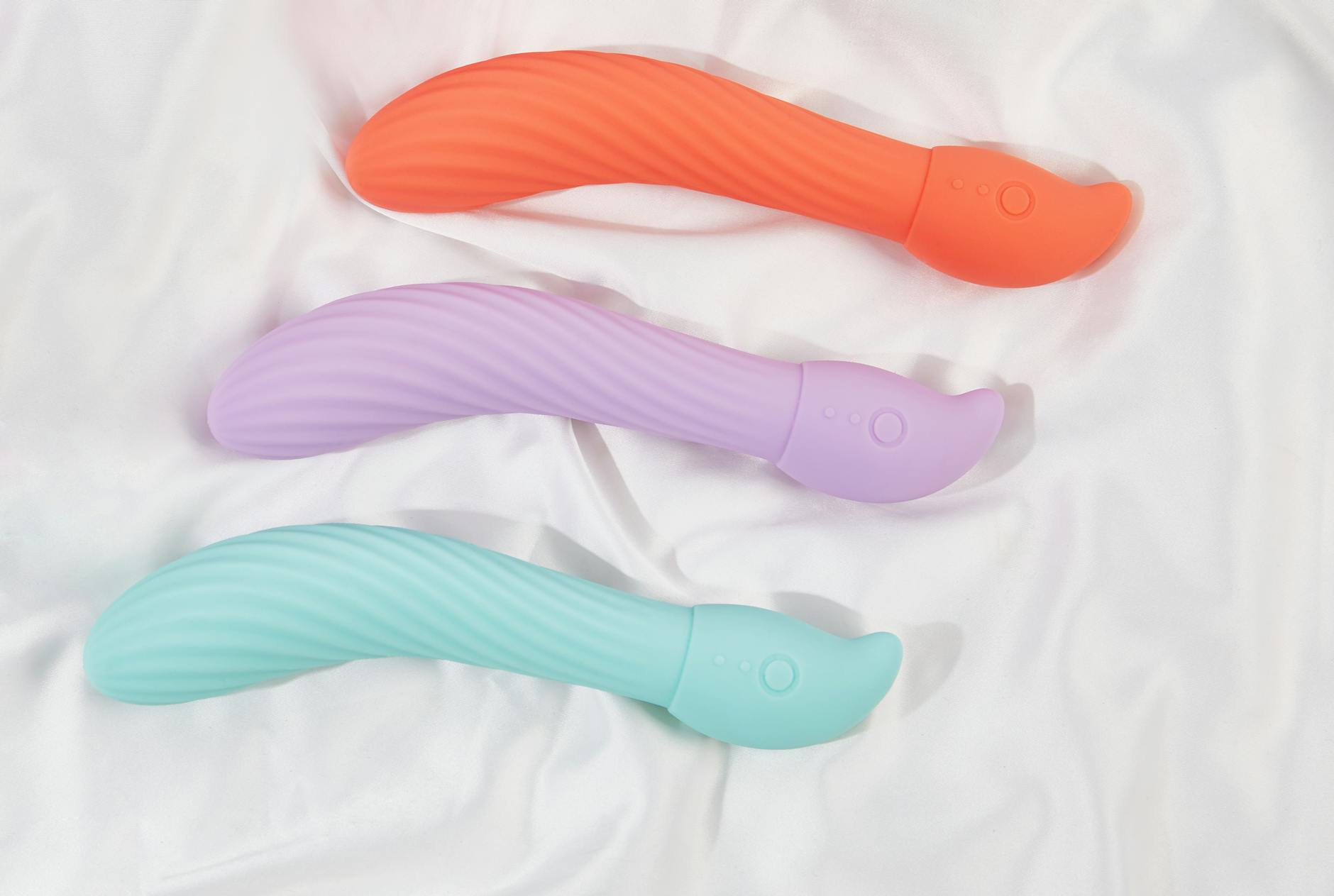
Photo by IFONNX Toys on Pexels
How lemon vibrators specifically support this process
Lemon clitoral vibrators use suction patterns rather than traditional vibration. That design choice is relevant here. The sensation is gentler, less demanding, and easier to pause or adjust. You're not fighting against a powerful motor. You're inviting a subtle, responsive sensation.
The device itself is small, discreet, and easy to control. You're not managing a large, complex toy. That simplicity reduces cognitive load, which matters when your nervous system is already working hard to feel safe.
Many people find that suction-based toys like the Lem create orgasmic potential where friction-based vibrators left them numb. That's not accidental. The suction pattern activates different nerve pathways, which can bypass some of the nervous system shutdown that trauma creates.
People also ask
Is it normal to feel nothing when using a vibrator after trauma?
Completely normal. Numbness is often your nervous system protecting you from sensation that might feel overwhelming. Don't interpret it as broken desire. Keep using the toy at low settings, without pressure to feel anything. Sensation often returns as your nervous system relaxes. This can take weeks or months. That's the normal timeline, not a sign something's wrong.
Can lemon vibrators trigger flashbacks?
They can if you use them before your nervous system is ready. That's why starting slow, external, and low-intensity matters. If flashbacks do occur, stop, ground yourself (feel your feet on the floor, notice five things you can see), and take a break. This doesn't mean toys are wrong for you. It means you need a slower timeline. Work with a therapist if flashbacks are consistent.
Should I use a toy solo or with my partner after relationship trauma?
Solo exploration first. You need to rebuild trust with your own body before adding another person's presence. Once you feel genuinely comfortable alone, introducing your partner (or a new partner) can be empowering. But there's no rush. Solo pleasure is complete in itself.
What if pleasure feels like a betrayal of what happened?
That's a common response, especially if your trauma involved coerced pleasure or mixed messages about your own desire. This is trauma work, not toy work. A trauma-informed therapist can help you separate your desire from what was done to you. Your pleasure is not a betrayal of your suffering. It's reclamation.
How do I know if I'm healing, not just numbering out?
Healing involves feeling more. Numbering out involves feeling less while telling yourself it's okay. Real healing: you notice moments of genuine curiosity about your body again. You can pause without spiraling into shame. You can say no and feel heard. Those are the signs. Not whether you're orgasming, but whether you're home in your own body again.
Can suction toys help if I'm on antidepressants or anti-anxiety medication?
Yes. Many people find suction-based clitoral vibrators work better with medication-induced numbness than traditional vibrators. The stimulation pattern is different. That said, medication can affect arousal directly. If pleasure stays flat despite therapy and tools, talk to your prescriber about adjustments. That's a medical conversation, not a toy limitation.
The long view
Reclaiming pleasure after relationship trauma isn't linear. You'll have sessions that feel great and sessions where you feel nothing. You'll have moments of panic followed by moments of genuine curiosity. You'll rebuild, slip back, rebuild again.
That's not failure. That's healing.
Lemon vibrators and other suction-based clitoral toys are designed to support this process because they put you in control, create predictable sensation, and allow you to explore at your own pace. They meet your nervous system where it is right now, not where you think it should be.
Your body, your timeline, your pleasure. Not in that order. Right now, your body comes first. Once your nervous system feels safe, pleasure follows. You don't have to rush it.
If you're navigating this journey and feeling stuck, reaching out for support at /contact can help you find resources or connect with a trauma-informed therapist. You don't have to do this alone.